{{ 'fb_in_app_browser_popup.desc' | translate }} {{ 'fb_in_app_browser_popup.copy_link' | translate }}
{{ 'in_app_browser_popup.desc' | translate }}
Join member to earn $100 store credits
Enjoy membership price up to 20% off!
Free shipping worldwide
{{ childProduct.title_translations | translateModel }}
{{ getChildVariationShorthand(childProduct.child_variation) }}
{{ getSelectedItemDetail(selectedChildProduct, item).childProductName }} x {{ selectedChildProduct.quantity || 1 }}
{{ getSelectedItemDetail(selectedChildProduct, item).childVariationName }}
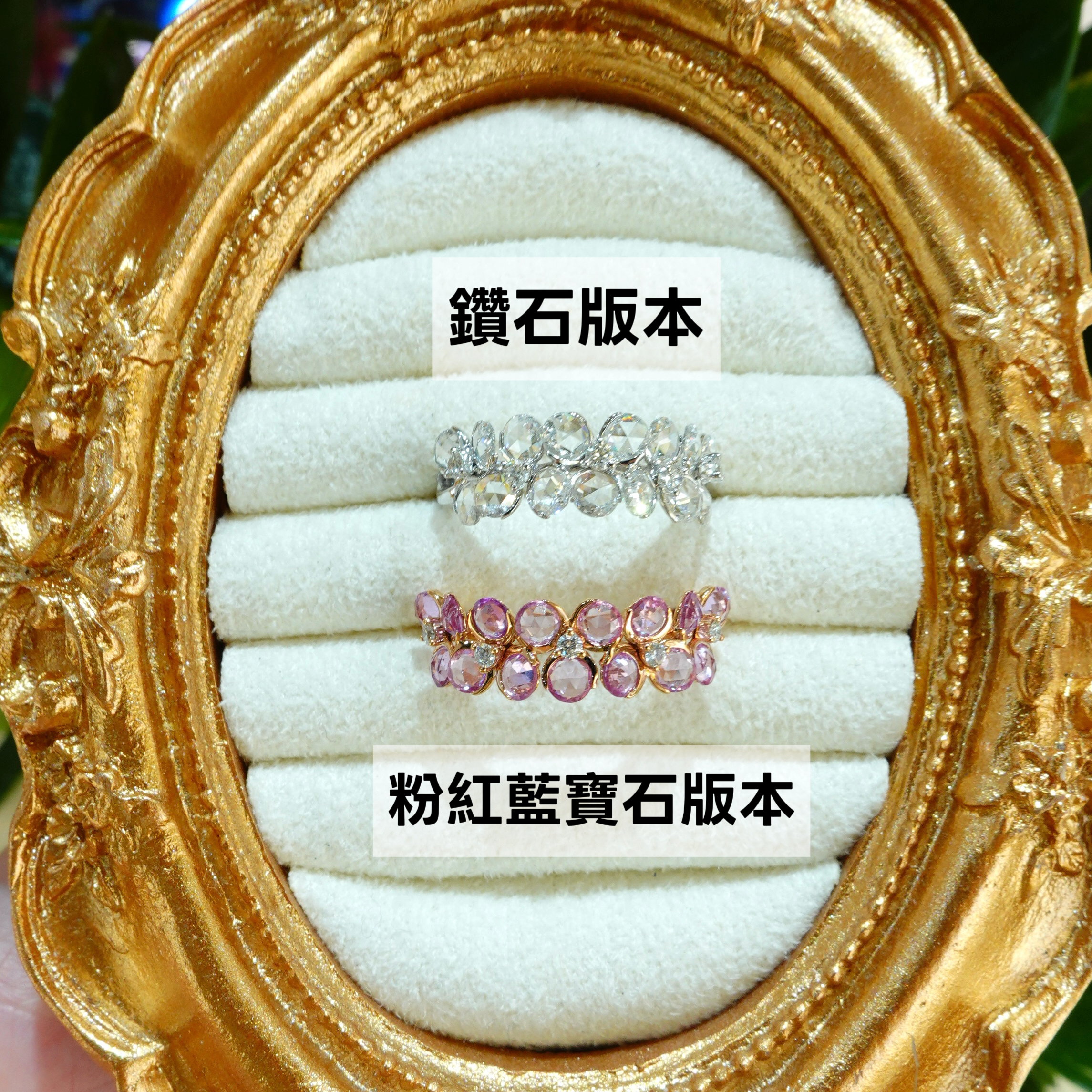
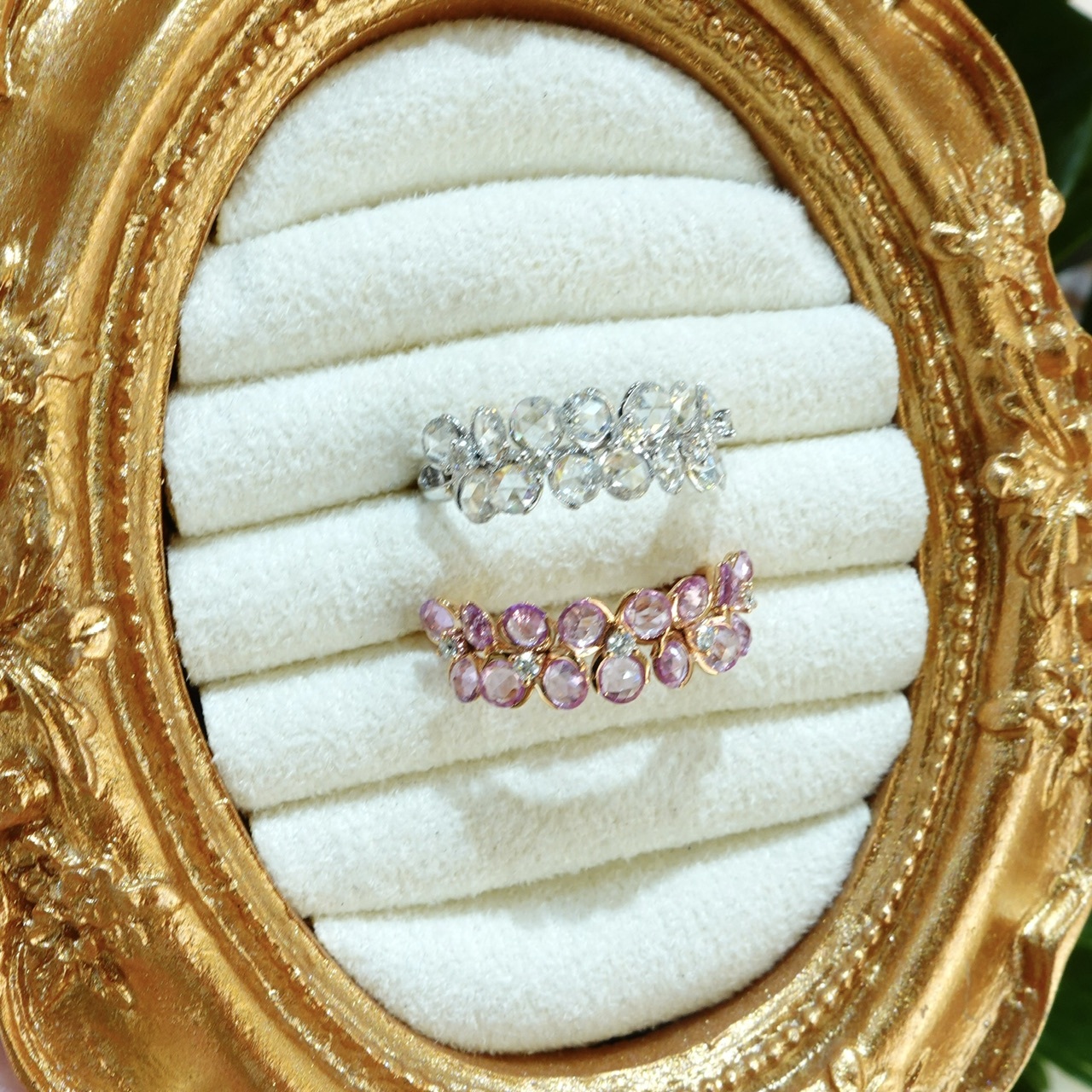
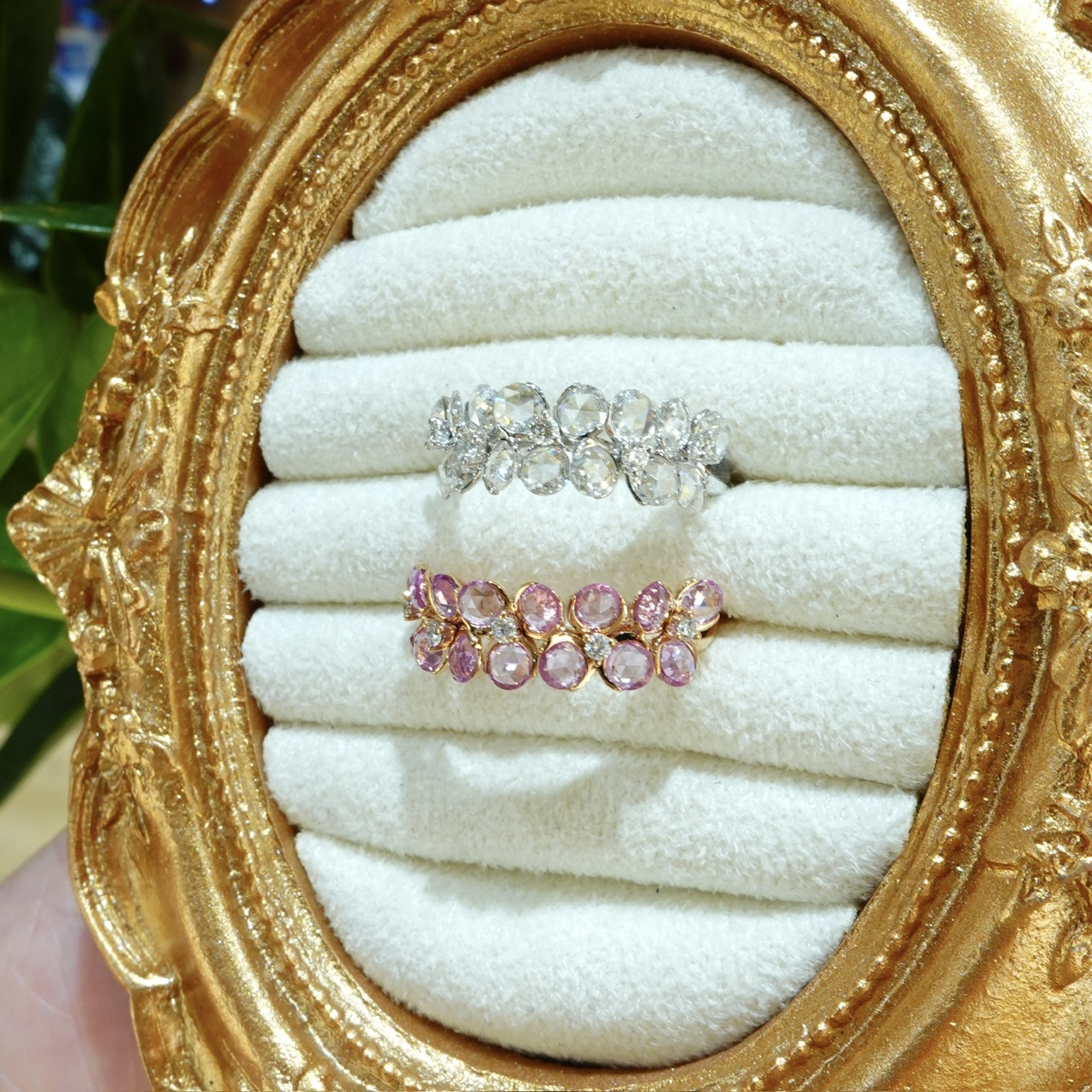
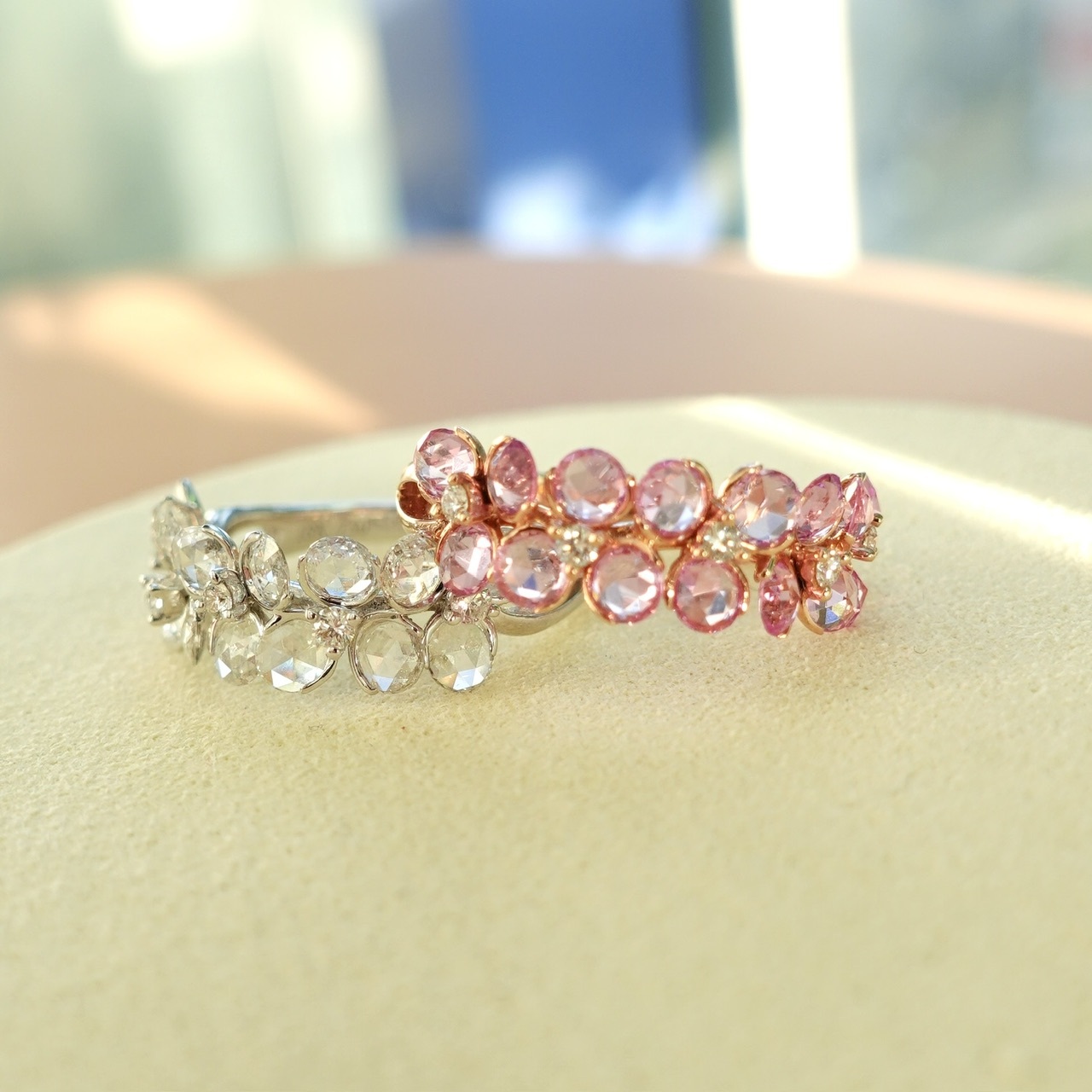
Rose Cut was the most popular diamond cut throughout the Renaissance in Europe. This cut prioritized preserving the weight of the rough stone over pursuing brilliance and sparkle. Therefore, while Rose Cut diamonds are not exceptionally flashy, they possess a remarkable transparency and clarity.
Bank transfer -2% off on order
Not enough stock. Your item was not added to your cart.
Not enough stock. Please adjust your quantity.
{{'products.quick_cart.out_of_number_hint'| translate}}
{{'product.preorder_limit.hint'| translate}}
Limit -1 per order.
{{'products.quick_cart.quantity_of_stock_hint'| translate : {message: quantityOfStock} }}
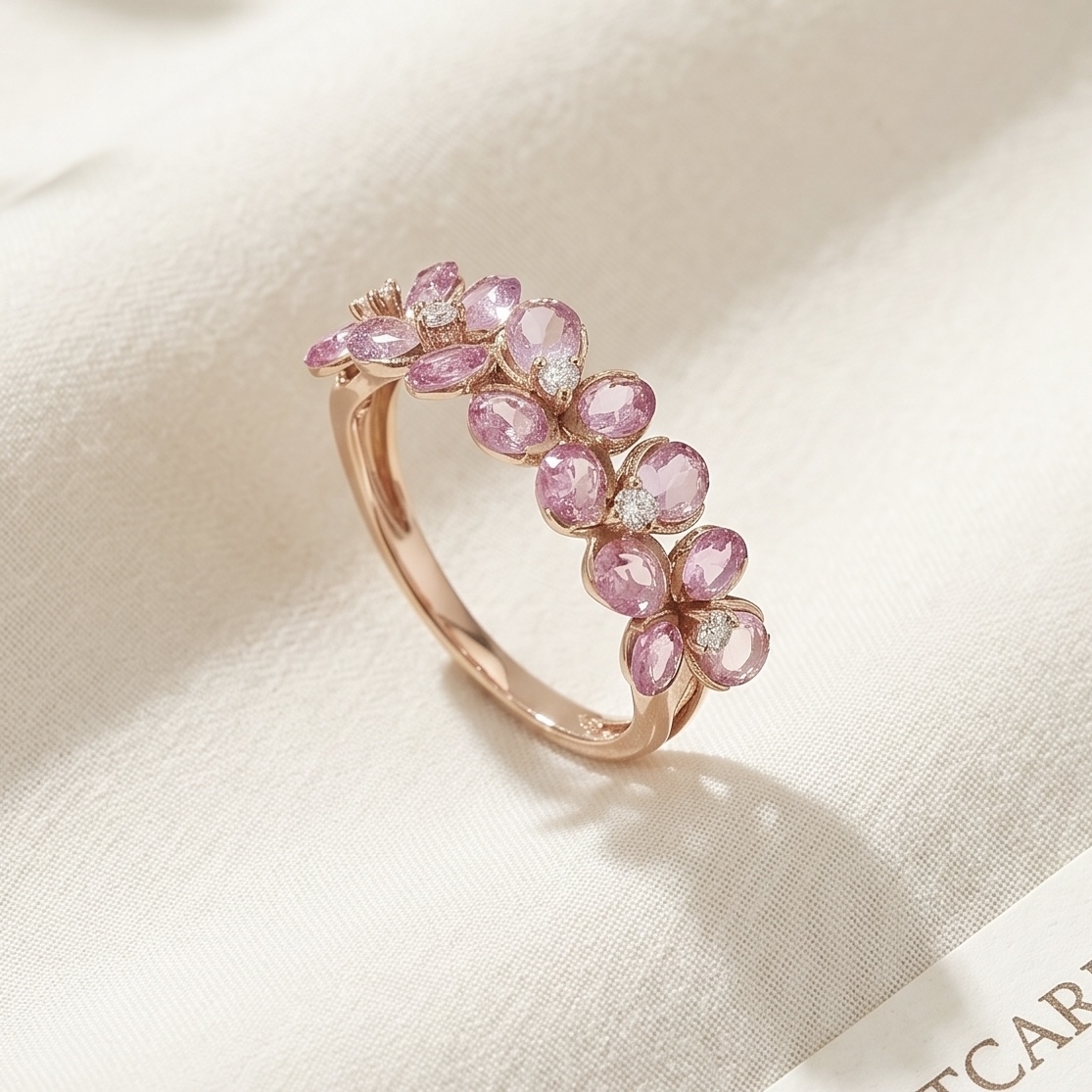
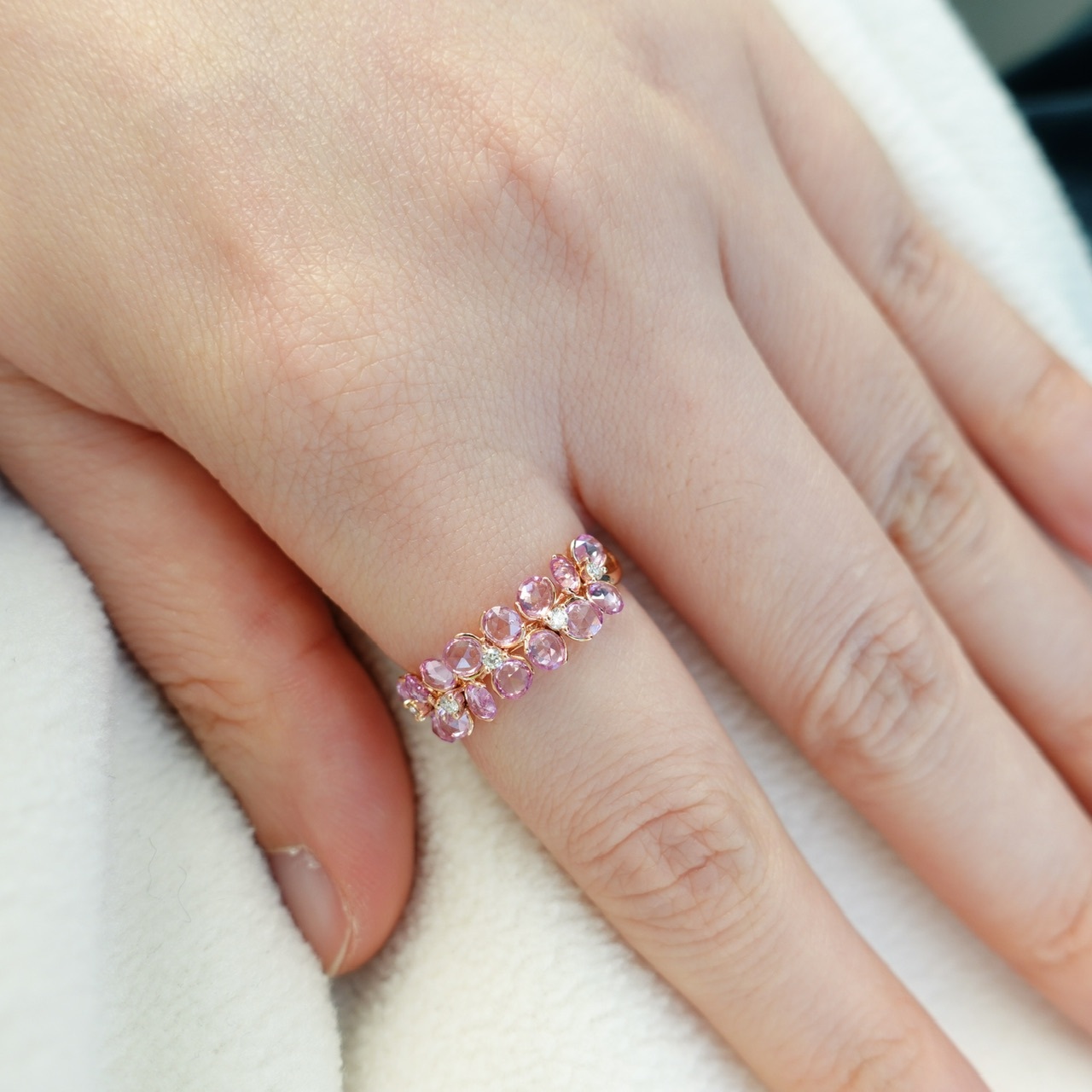
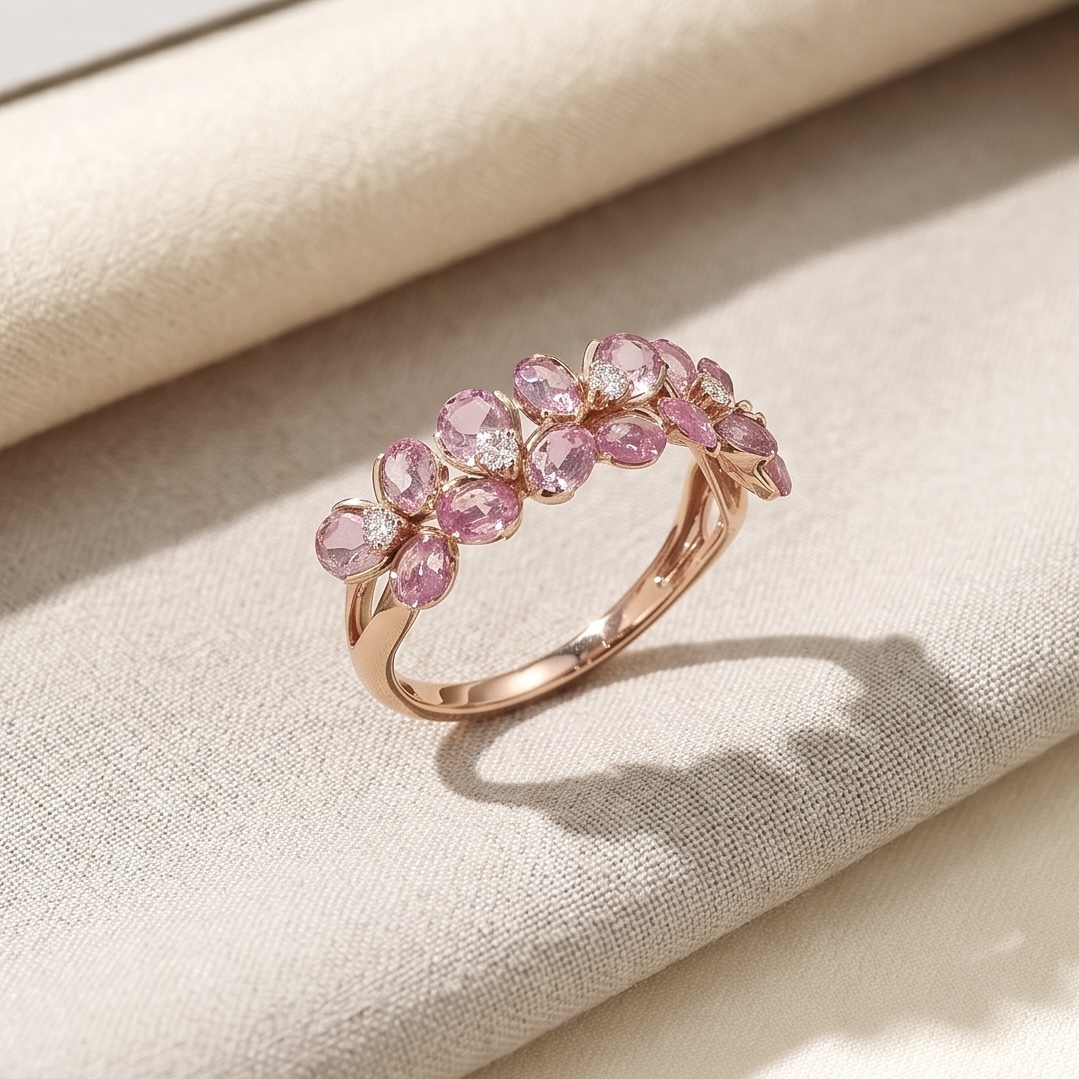
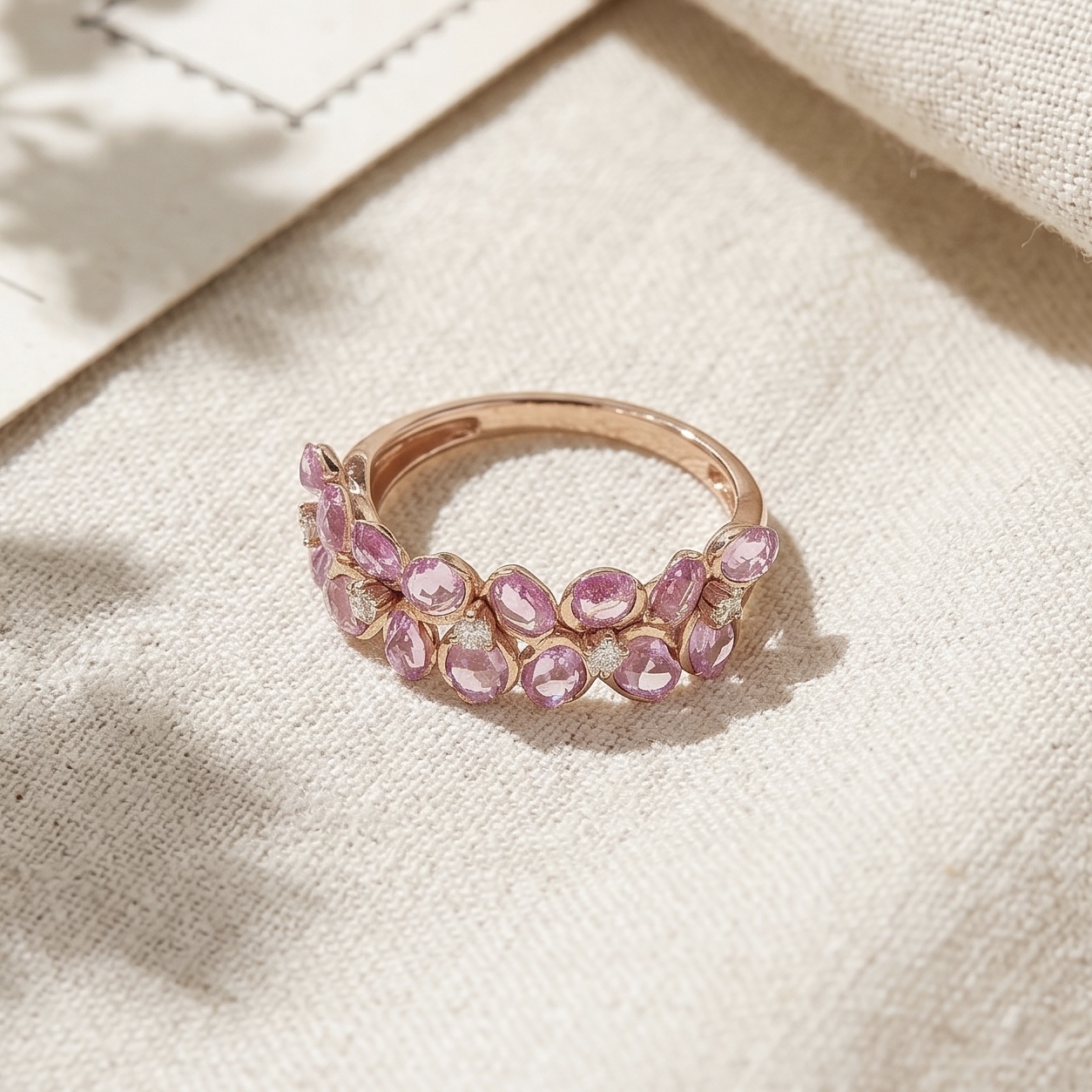
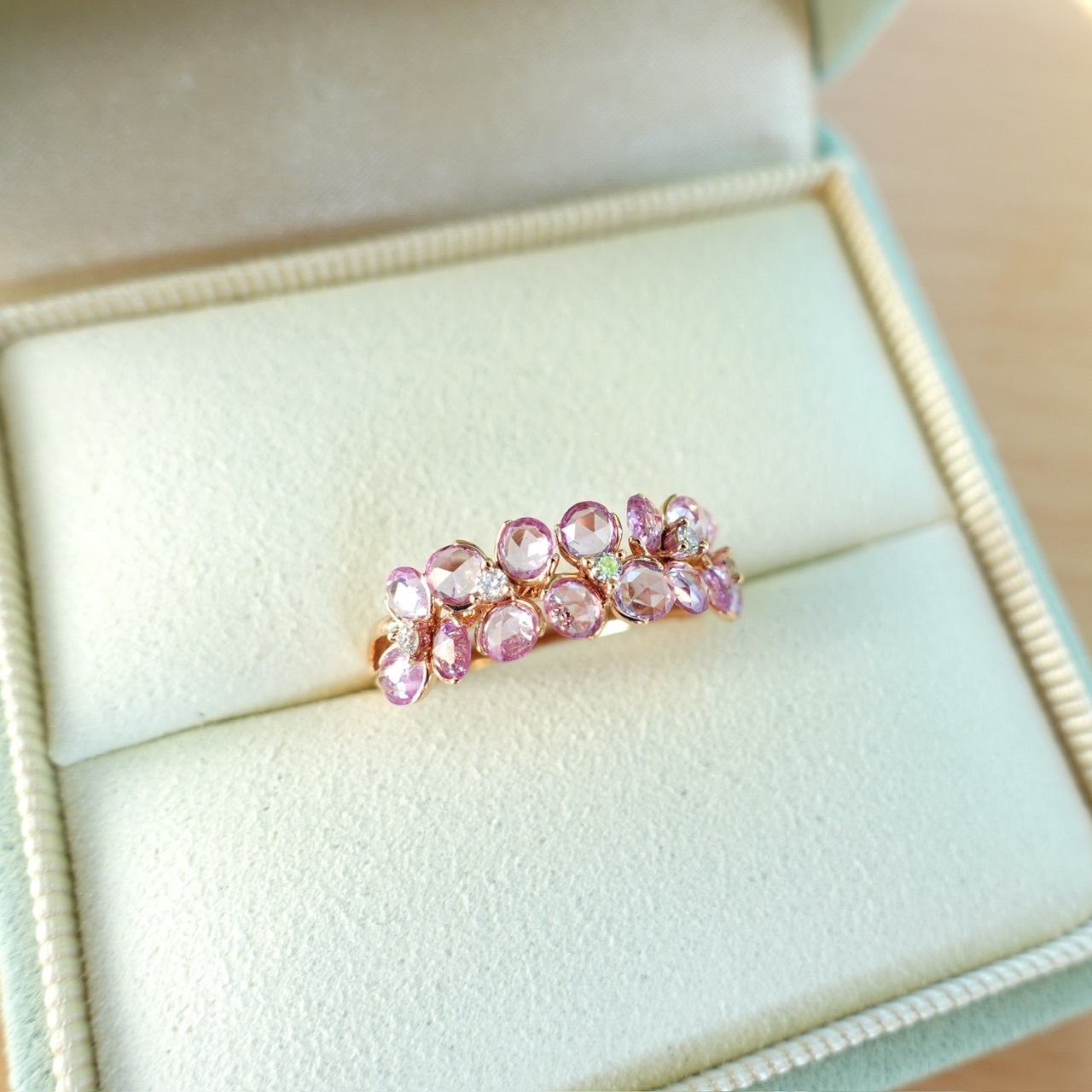
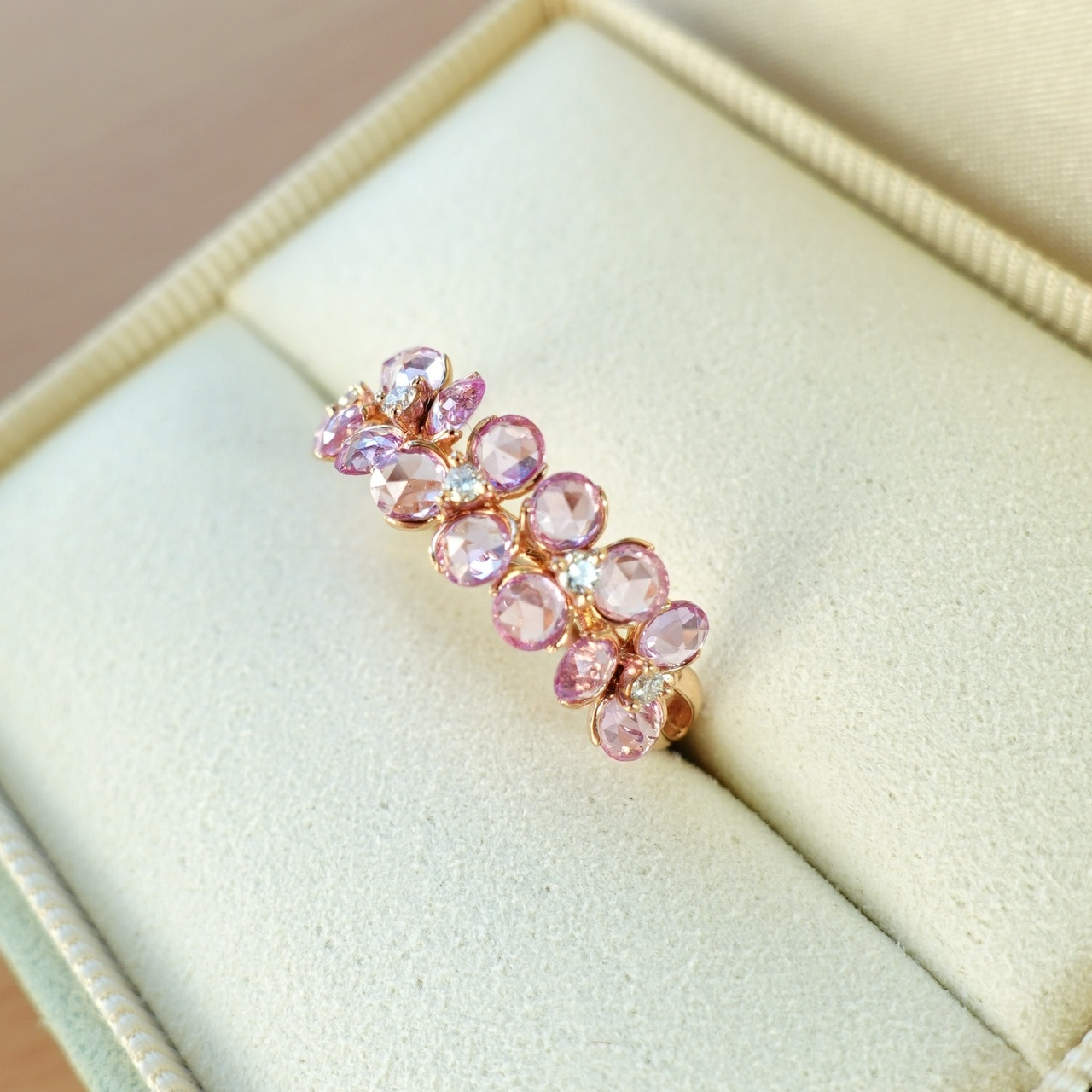
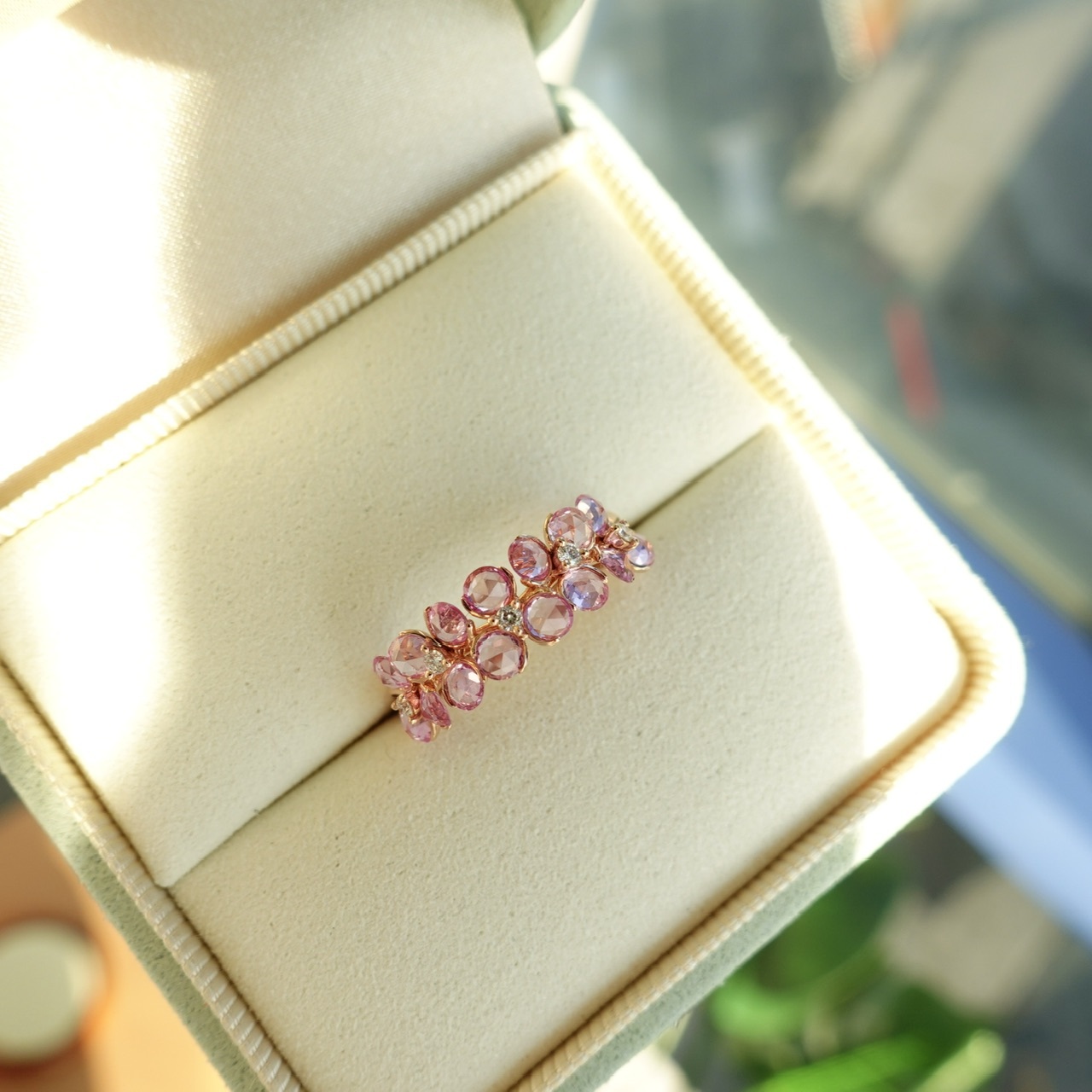
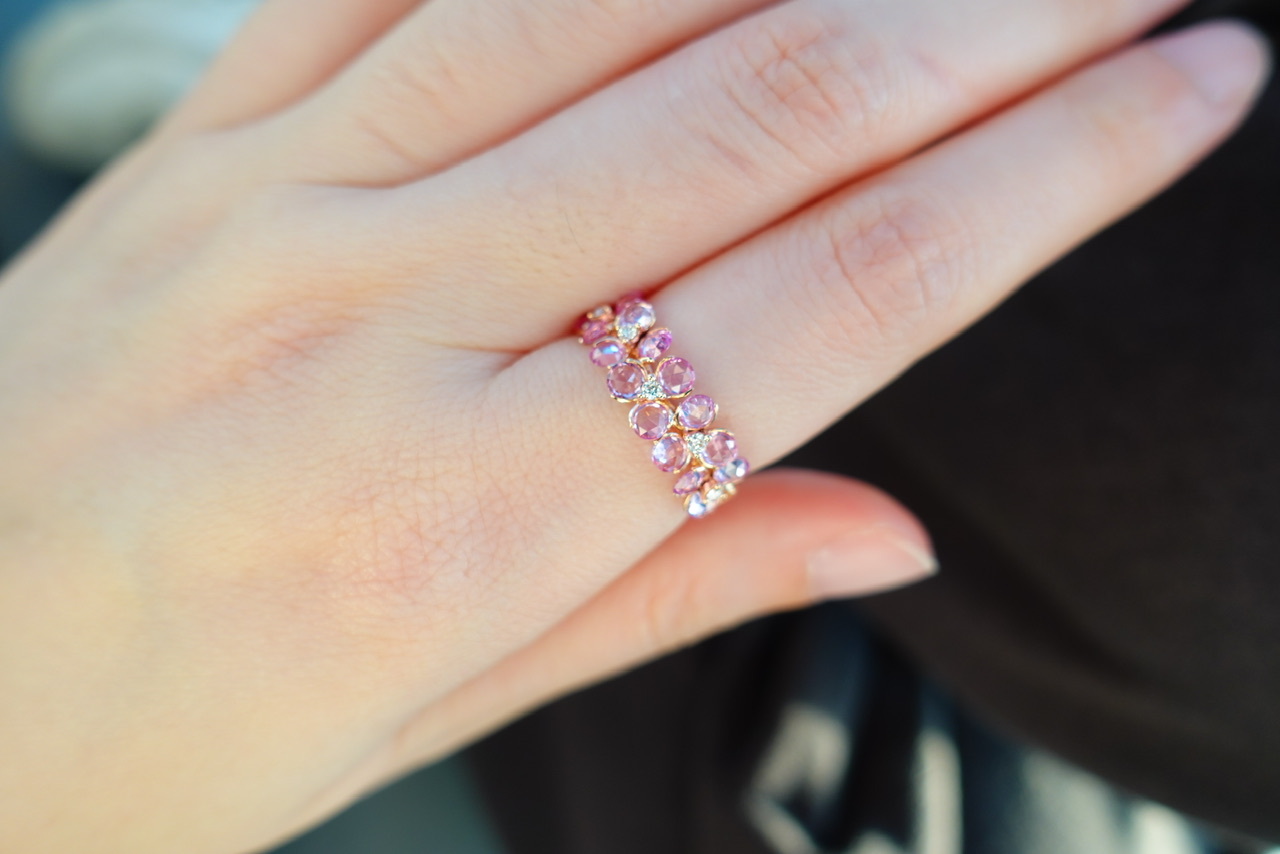
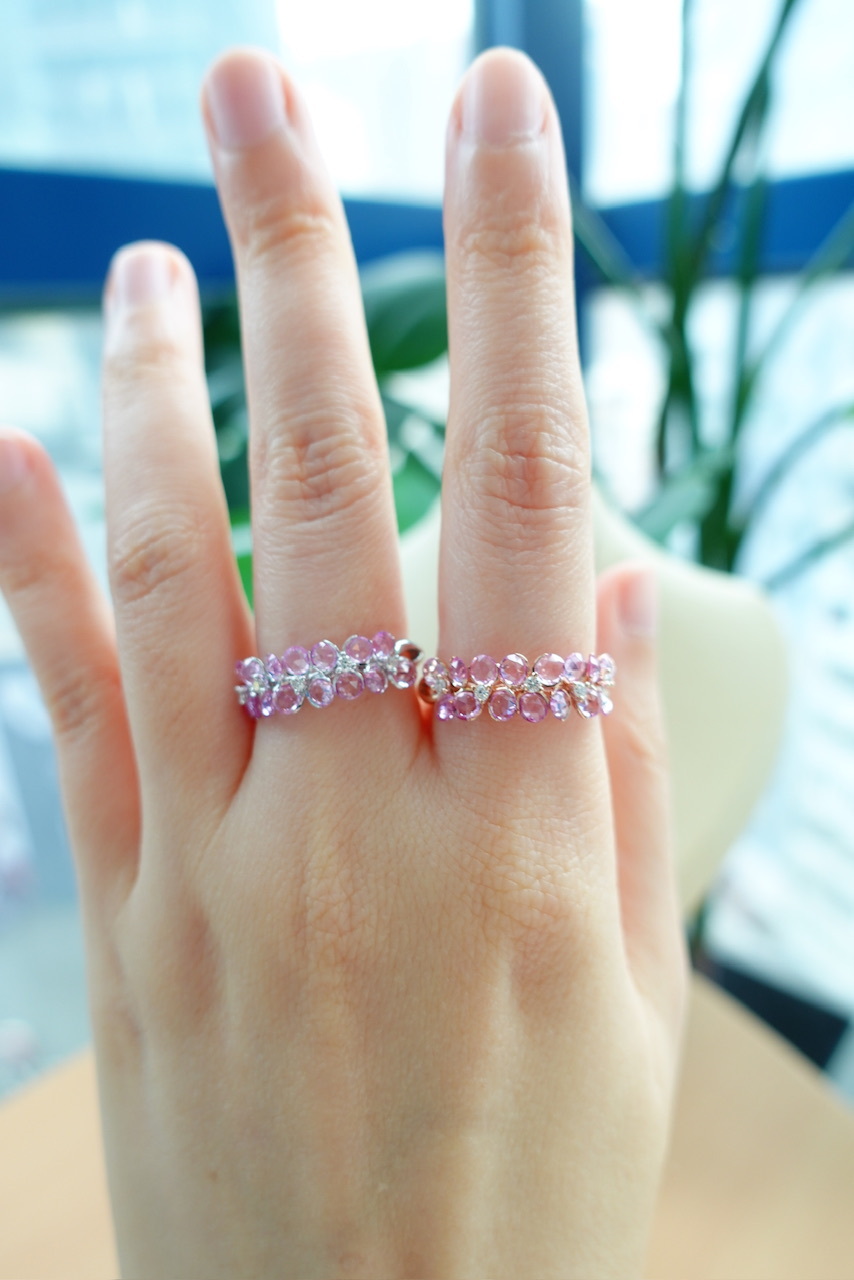
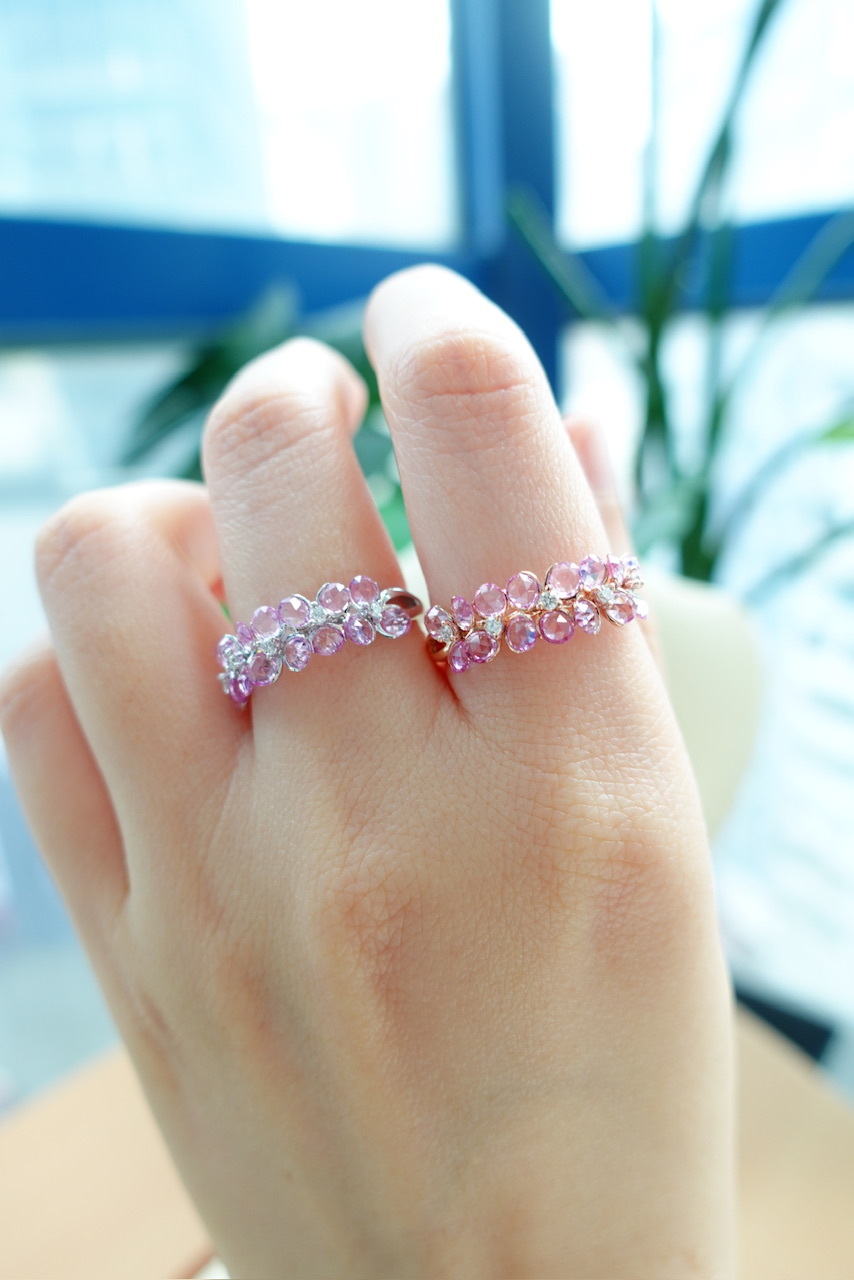
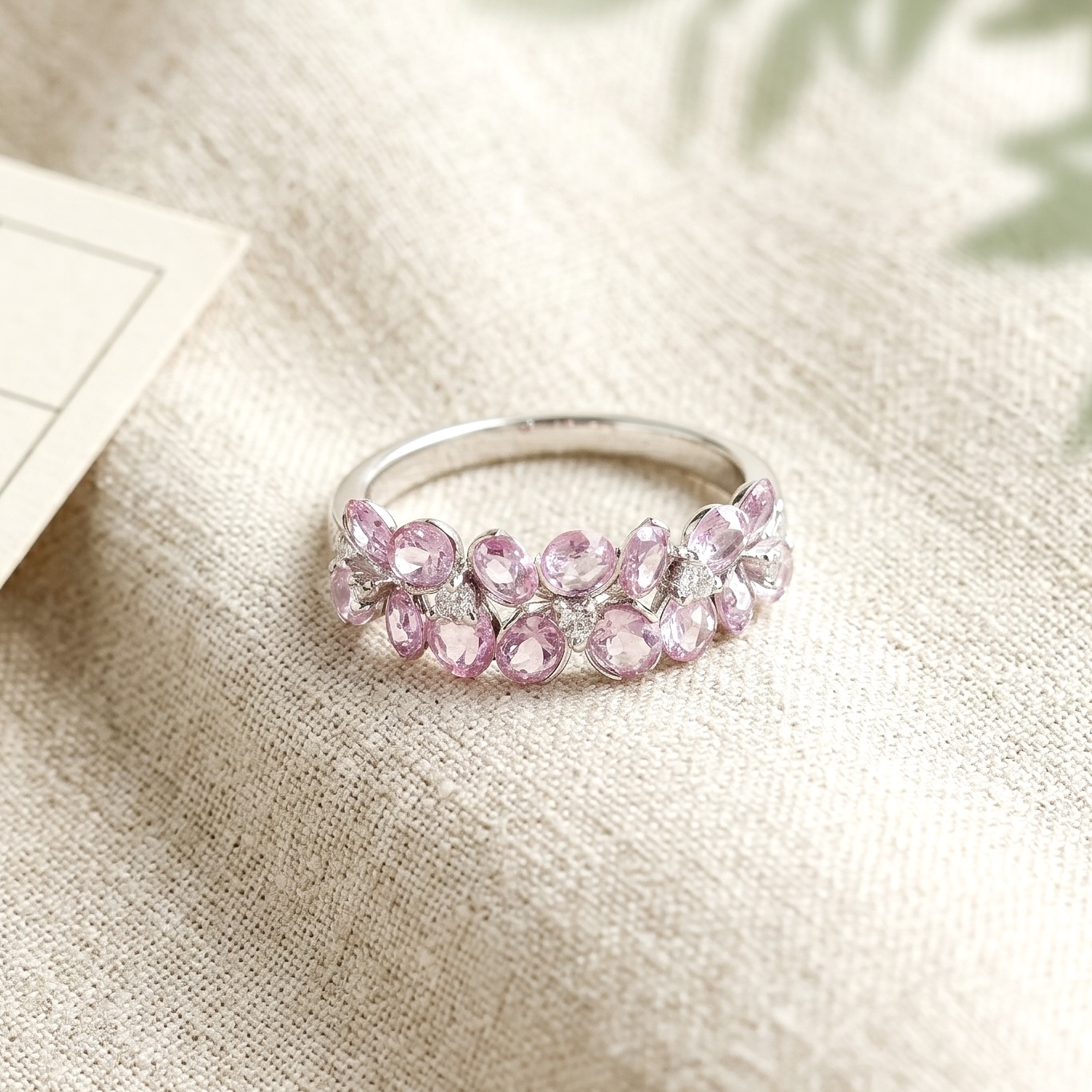
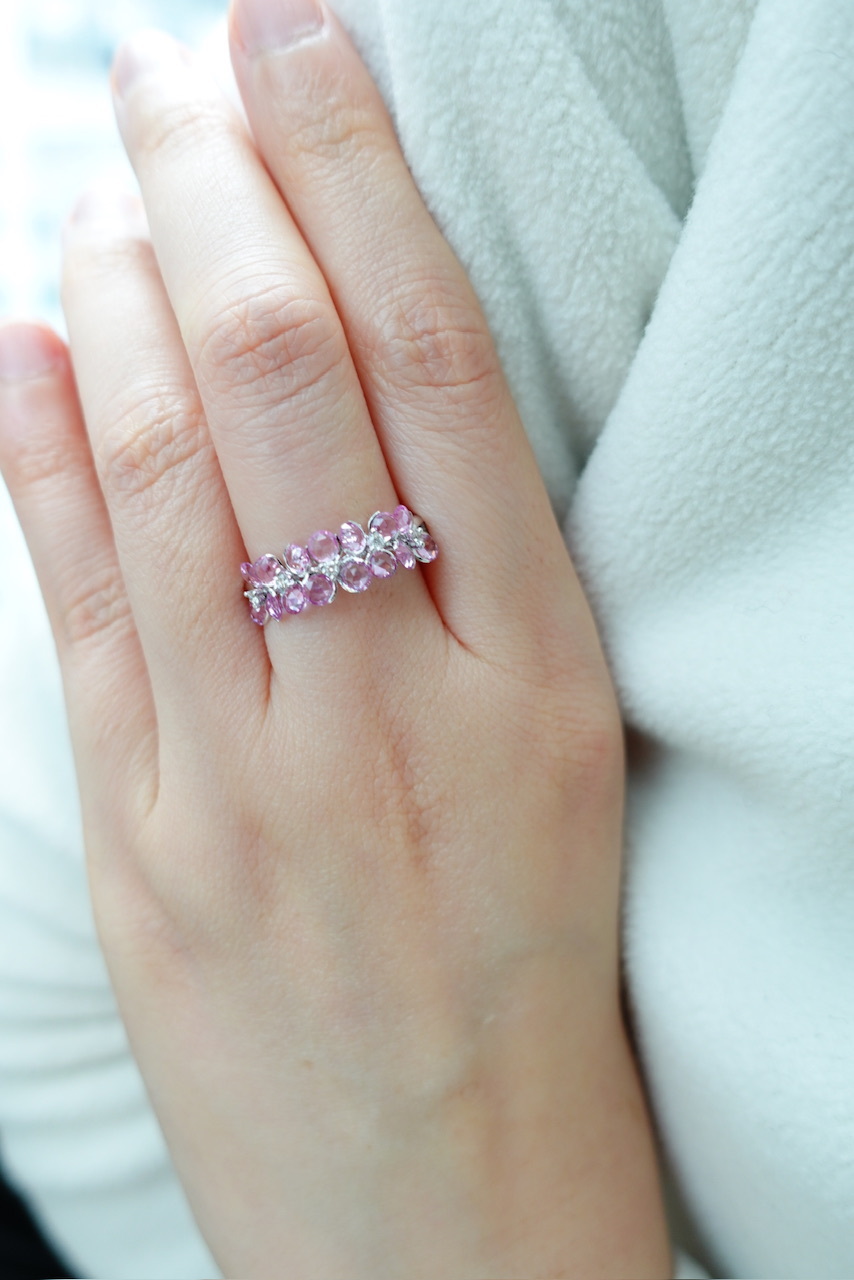
Material: 18K goldAU750
Gold weight: ~3g
Centre stone: Natural Pink Sapphire
1.81ct/15
Diamonds: ~0.08ct/5(F, VS)
Many people are unaware that before the brilliant cut emerged, there was another cut that prevailed worldwide, particularly in Europe, for centuries—Rose Cut.
Rose Cut was the most popular diamond cut throughout the Renaissance in Europe. This cut prioritized preserving the weight of the rough stone over pursuing brilliance and sparkle. Therefore, while Rose Cut diamonds are not exceptionally flashy, they possess a remarkable transparency and clarity. Lacking the intense fire of modern cuts, they are imbued with the very essence of the Renaissance era. This characteristic lends Rose Cut diamonds an antique, rustic charm, seemingly detached from modern machinery—a "soft, subtle effect" that many find captivating.
The most basic Rose Cut features a flat base, with a crown composed of symmetrically arranged triangular facets, resembling a raised dome. The earliest Rose Cuts had crowns with only three or six facets. As polishing techniques evolved, the facet structures of Rose Cuts became increasingly complex, with the facet count growing, eventually reaching up to 24 facets.
It is said that the inspiration for the triangular facets of the Rose Cut came from the rose windows of European cathedrals. The radiating, petal-like arrangement is the hallmark of the Rose Cut. The pavilion boasts precise facets with perfect symmetry. The exterior is covered in triangular facets, giving the overall shape the appearance of a rose bud; each facet resembles a flower petal, and when viewed from the side, it forms a raised, beaded dome, with the highest point at the very center. Observing the base of a Rose Cut diamond through a proportion-scope reveals an image reminiscent of the stained-glass windows adorning the ceilings of majestic cathedrals.