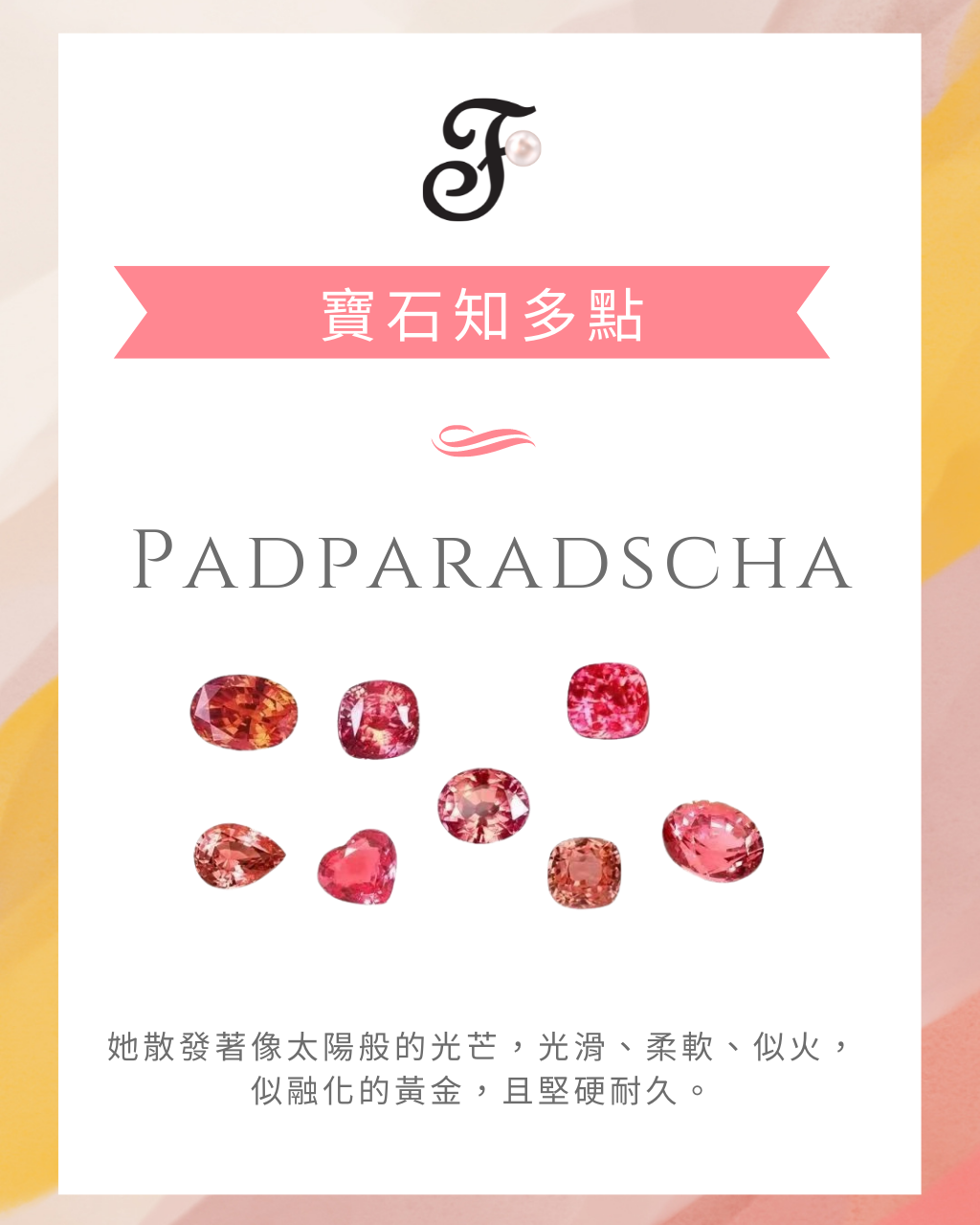
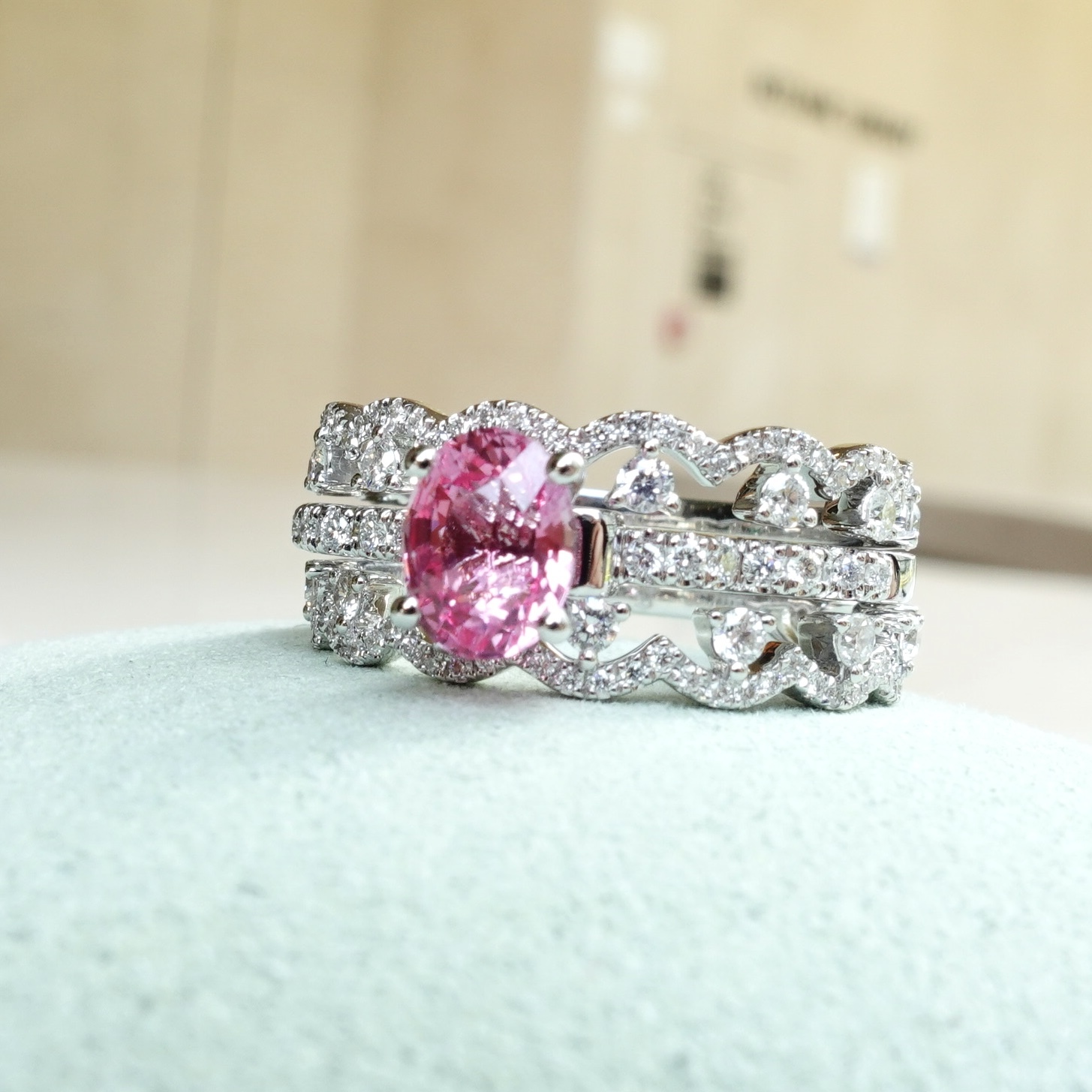
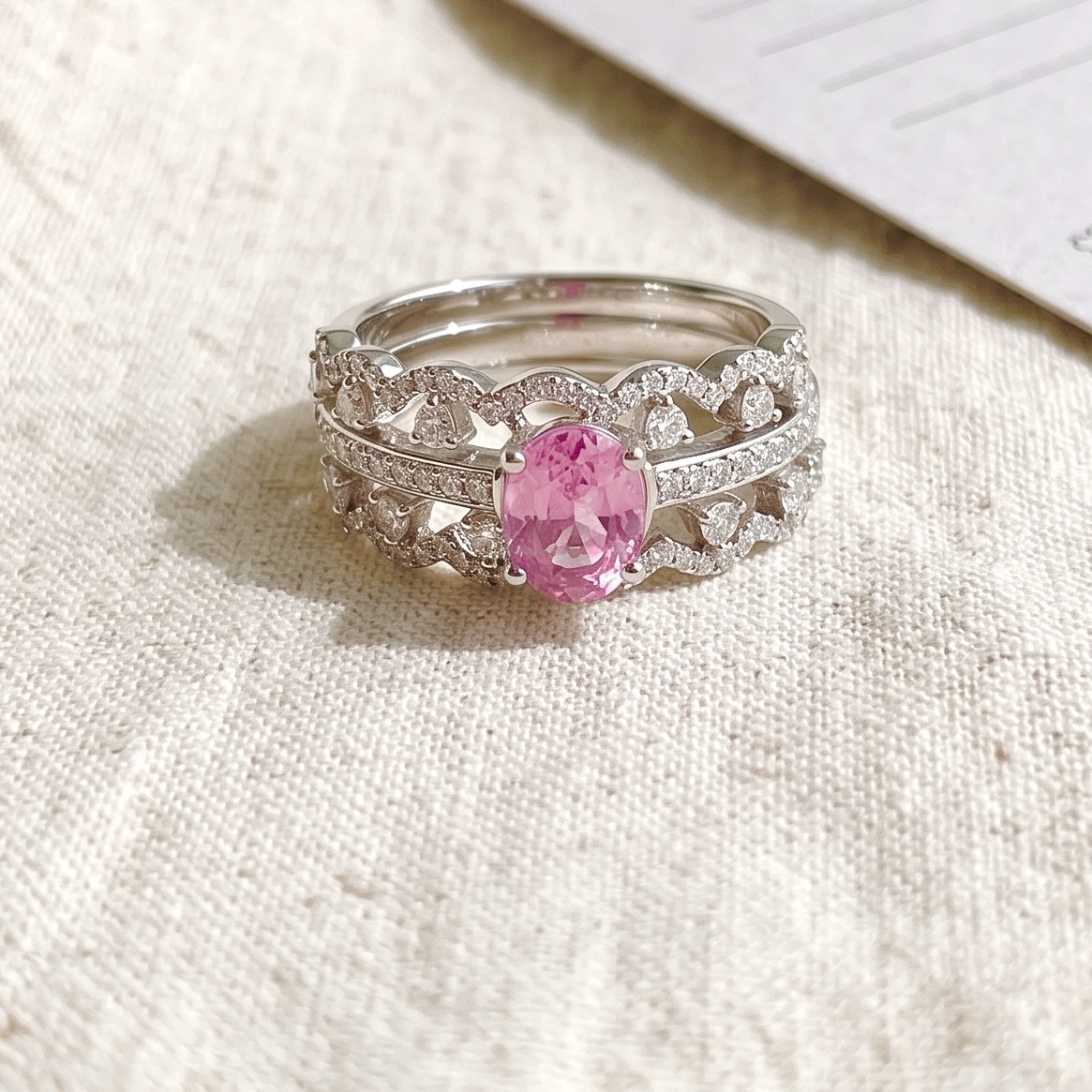
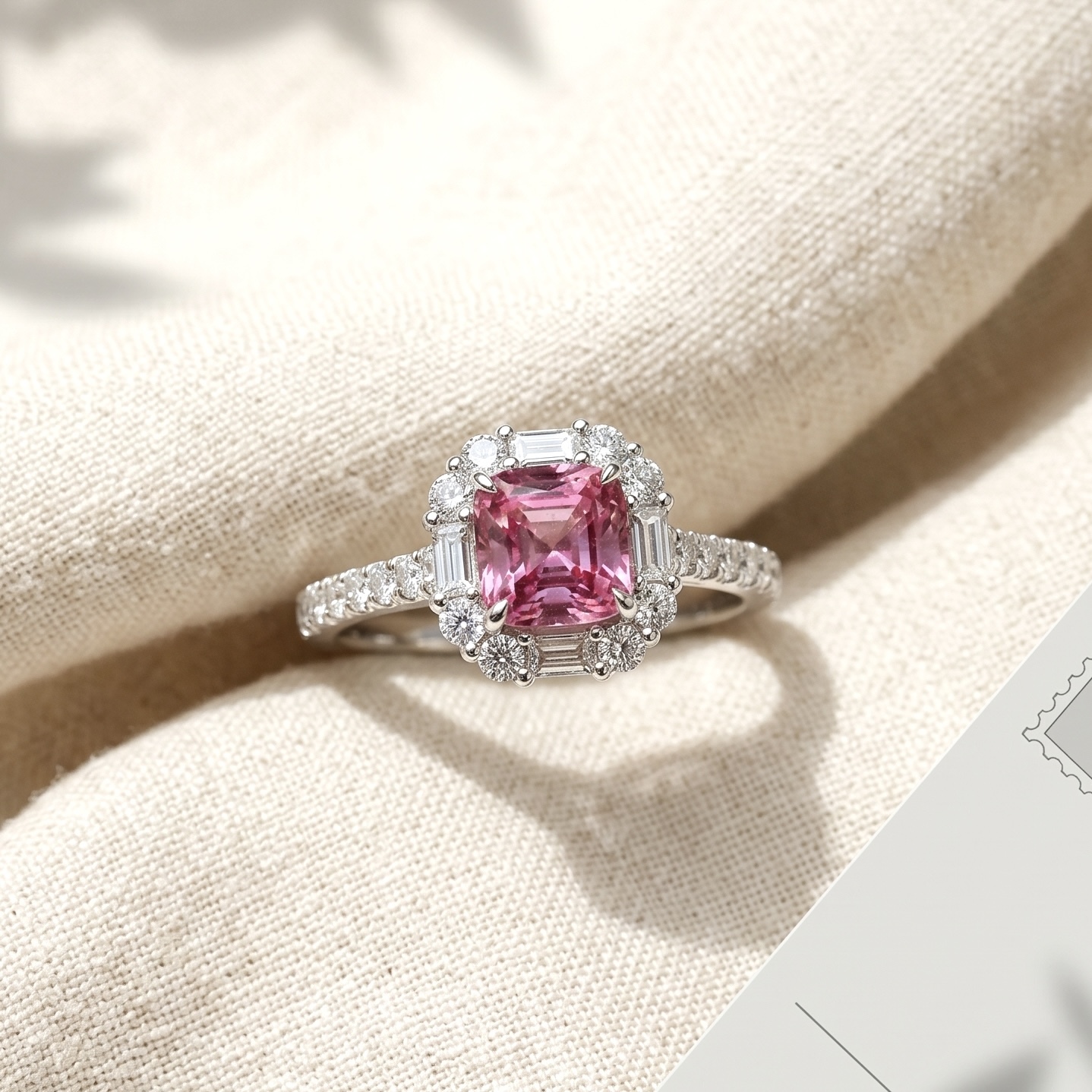
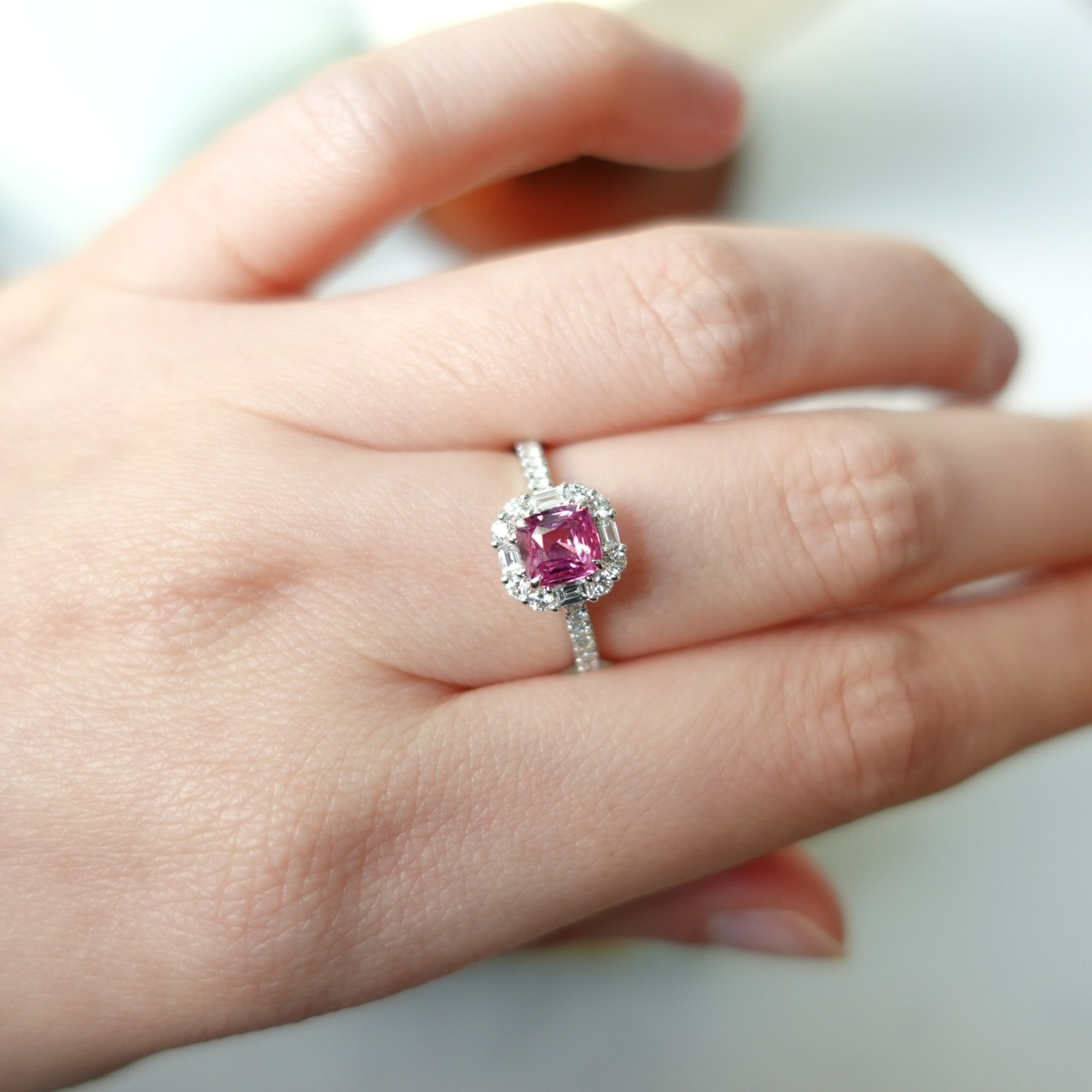
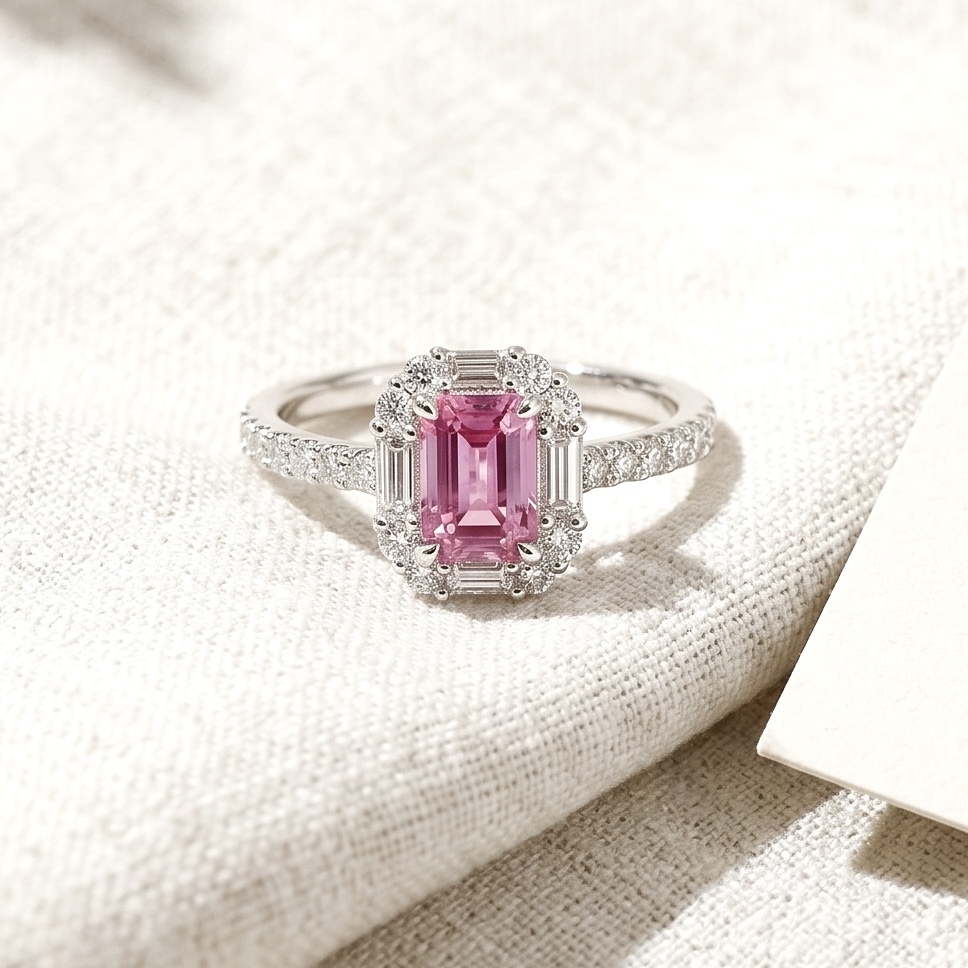
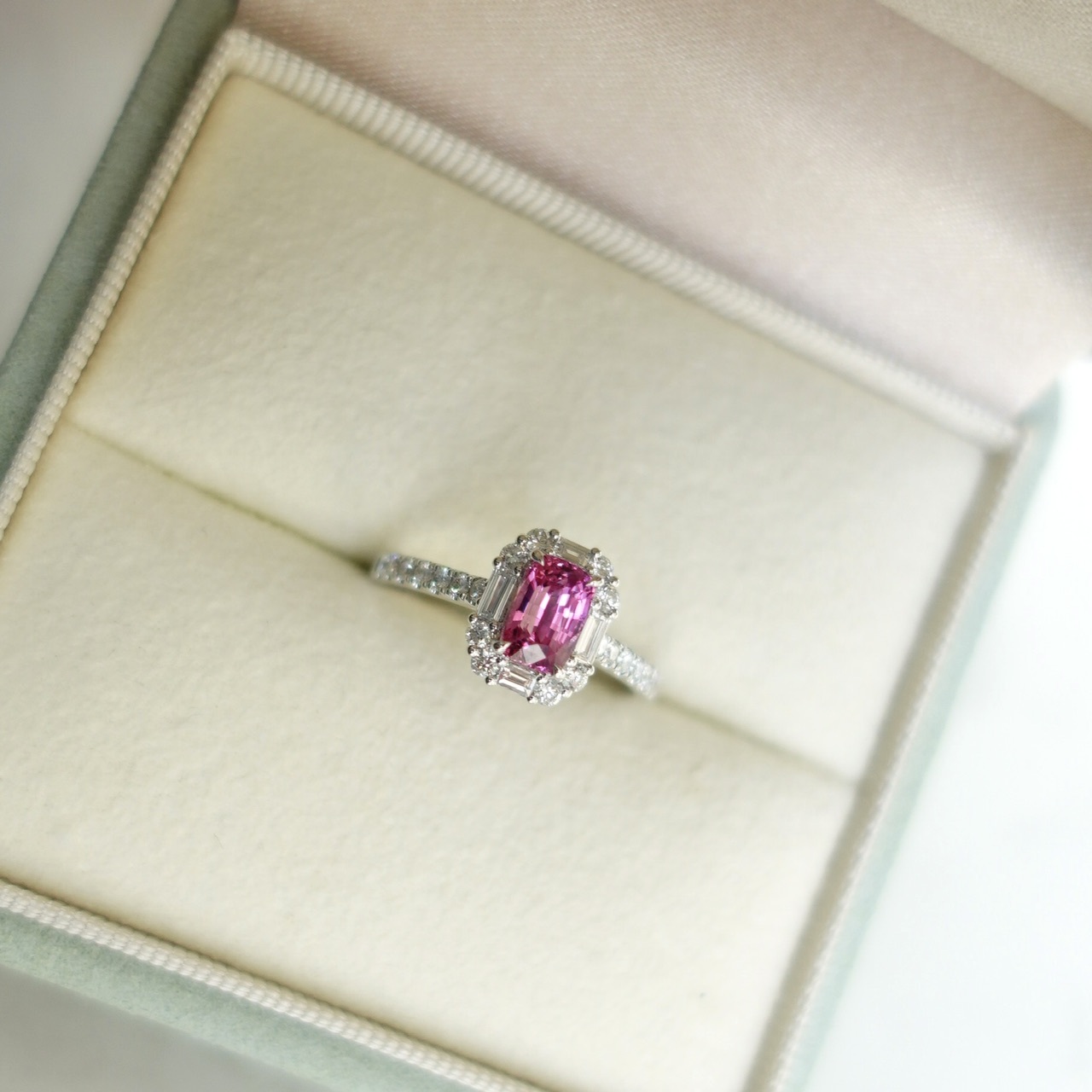
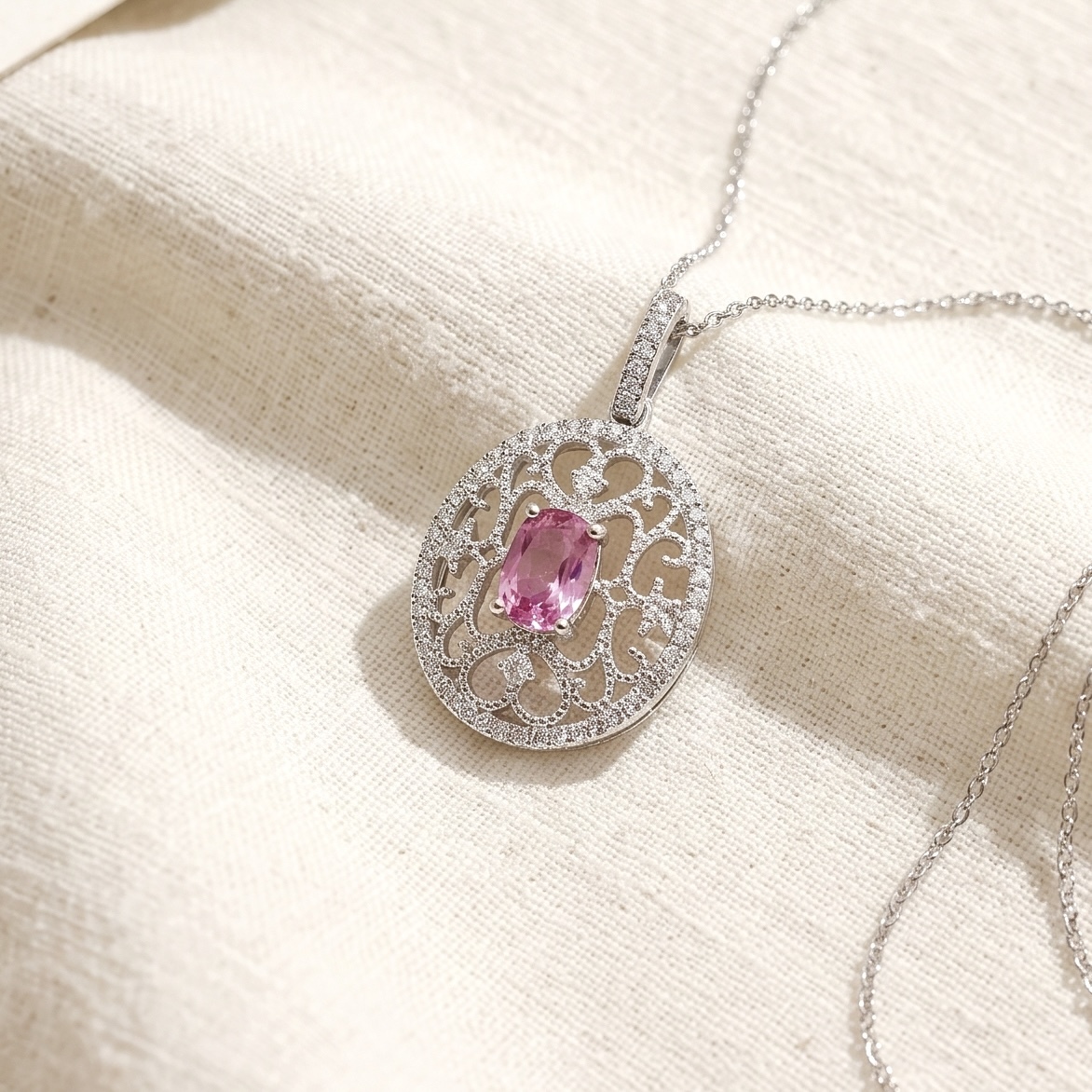
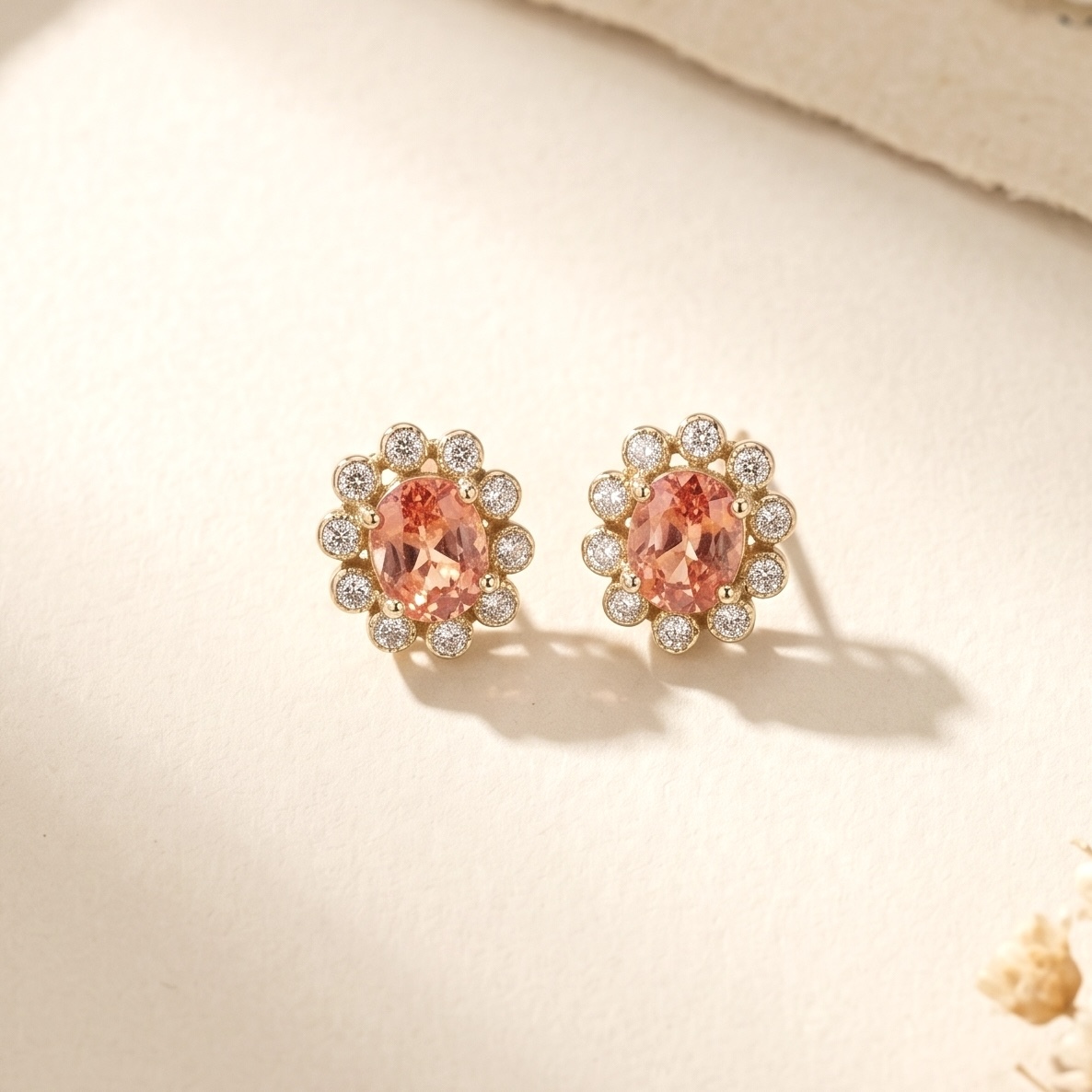
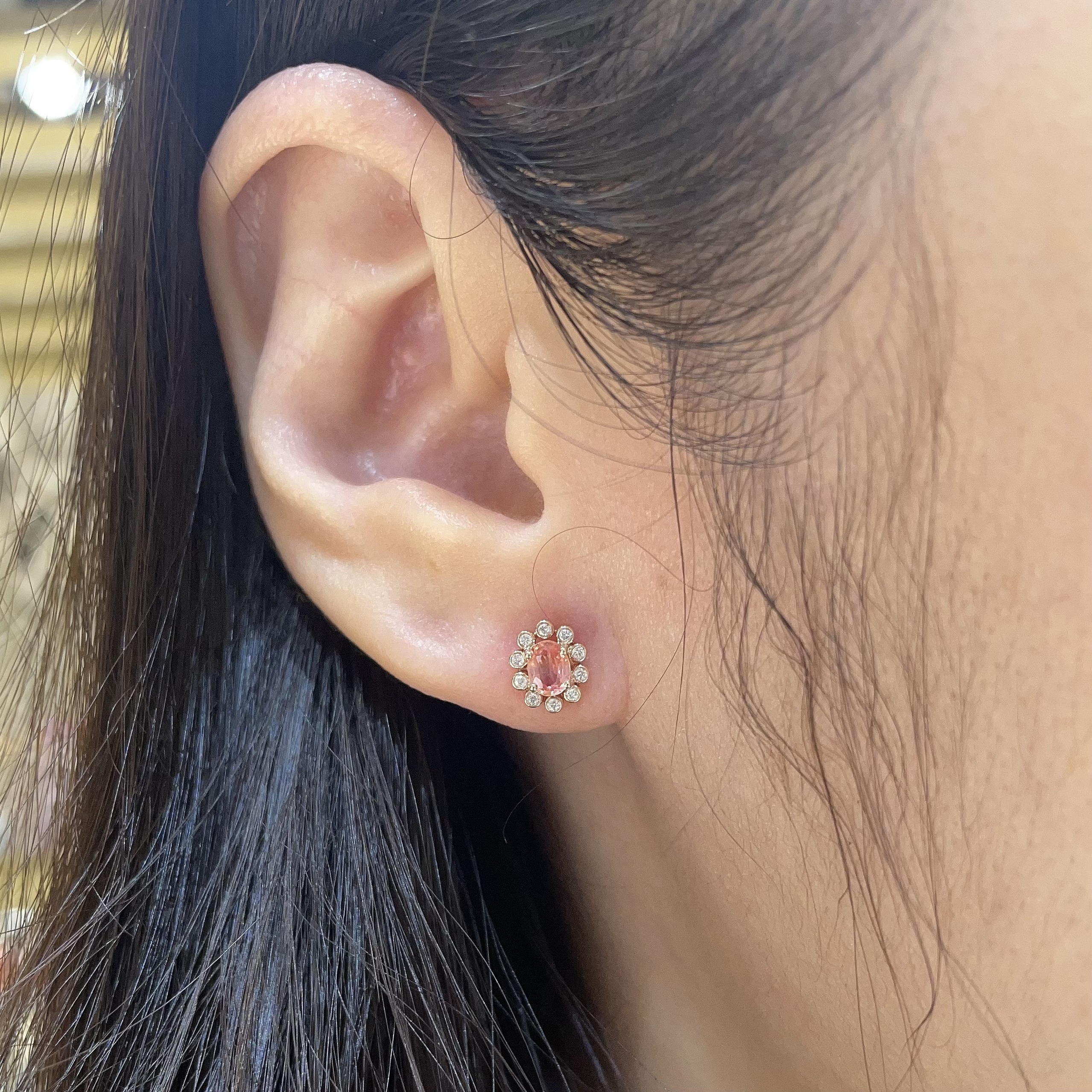
Padparadscha又名「蓮花藍寶石」或「蓮花剛玉」,屬於剛玉家族。寶石學家將紅色含鉻的剛玉歸類紅寶石,其餘為藍寶石,因此Padparadscha也是藍寶石族群的一員。它的粉橙蓮花色彩被稱為「五萬分之一的奇跡」,所以才有了帝王藍寶石的美譽。蓮花剛玉很少見,價格昂貴,許多鑒賞家認為它是所有寶石中最漂亮的。
能被稱為Padparadscha,不論產地,首先它必須滿足同時擁有粉色和橙色,兩種色調巧妙的融合在一起。在標準日光下觀察時,顏色由明顯淺色到中等色調的微粉橙色,乃至橙色到粉紅或橙紅色。
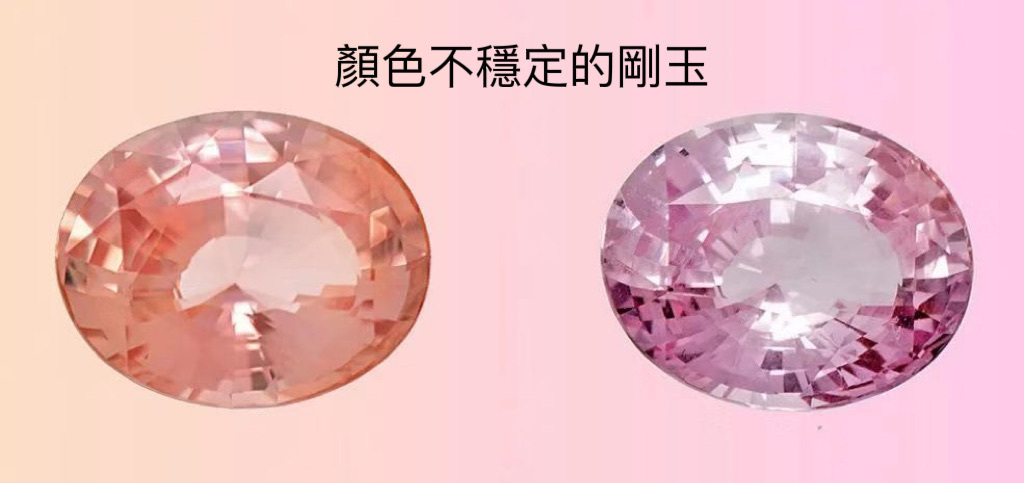
且也只有顏色穩定的橙粉色藍寶石,才會給予Padparadscha的稱號,如果會褪色的只能被稱作粉橙色藍寶石。這種超罕見的粉紅色和橙色的混合色,是藍寶石中最稀有的顏色,使Padparadcha成為所有藍寶石之王,也是最昂貴的寶石之一。
為什麼Padparadscha如此珍貴?
Padparadscha的硬度僅次於鑽石,且產地僅有四地,產量也極為稀少,據考證Padparadscha礦藏儲量僅為紅寶石的1%,礦源稀少程度堪比世界上產量最為稀少的鴿血紅!因而收藏價值頗高。
產地
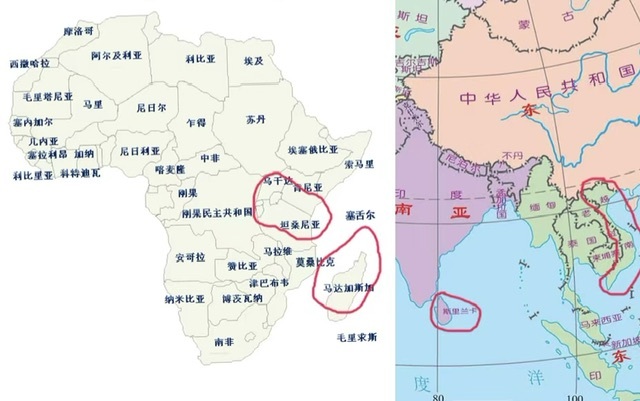
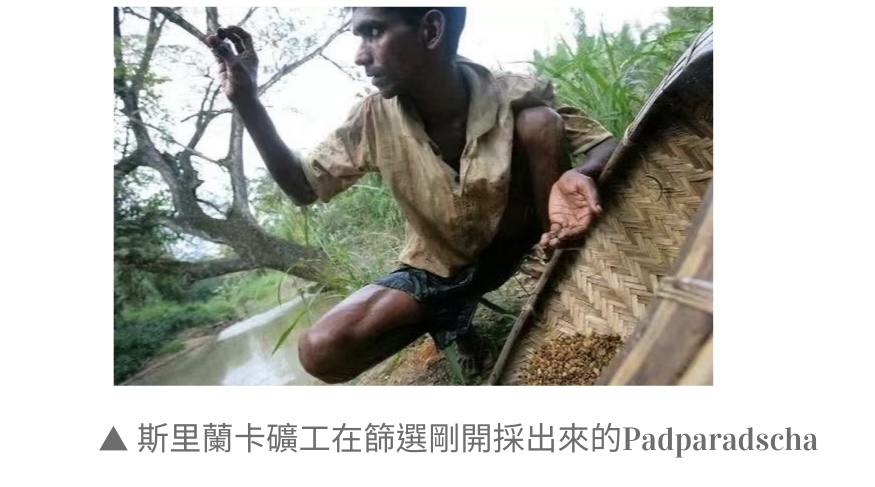
Padparadscha最初是在斯里蘭卡被發現,因而最知名的產地就是斯里蘭卡,後來在非洲的馬達加斯加、坦桑尼亞、南亞的越南也有這種顏色的藍寶石產出,但是產地依舊是非常稀少的。
產地中以斯里蘭卡最正統,現在國際上普遍認可的Padparadscha是泛指在標準日光下,色調明亮,淺到中等飽和度的「帶有粉橙兩種色調」的剛玉。
顏色
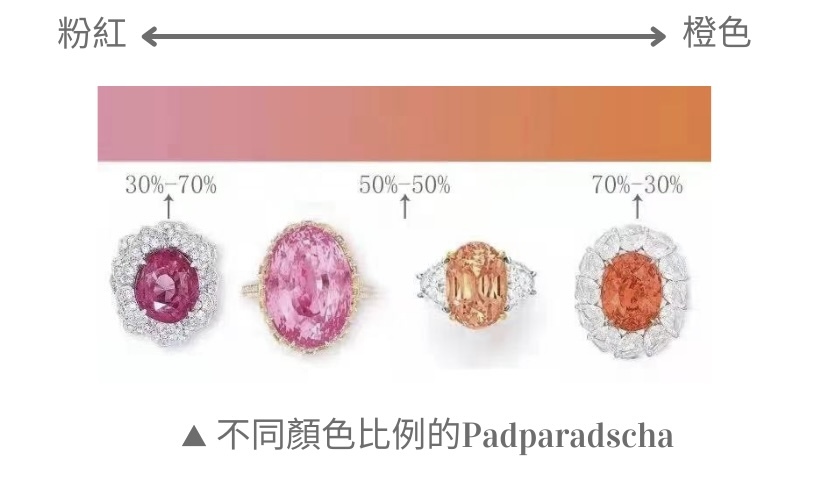
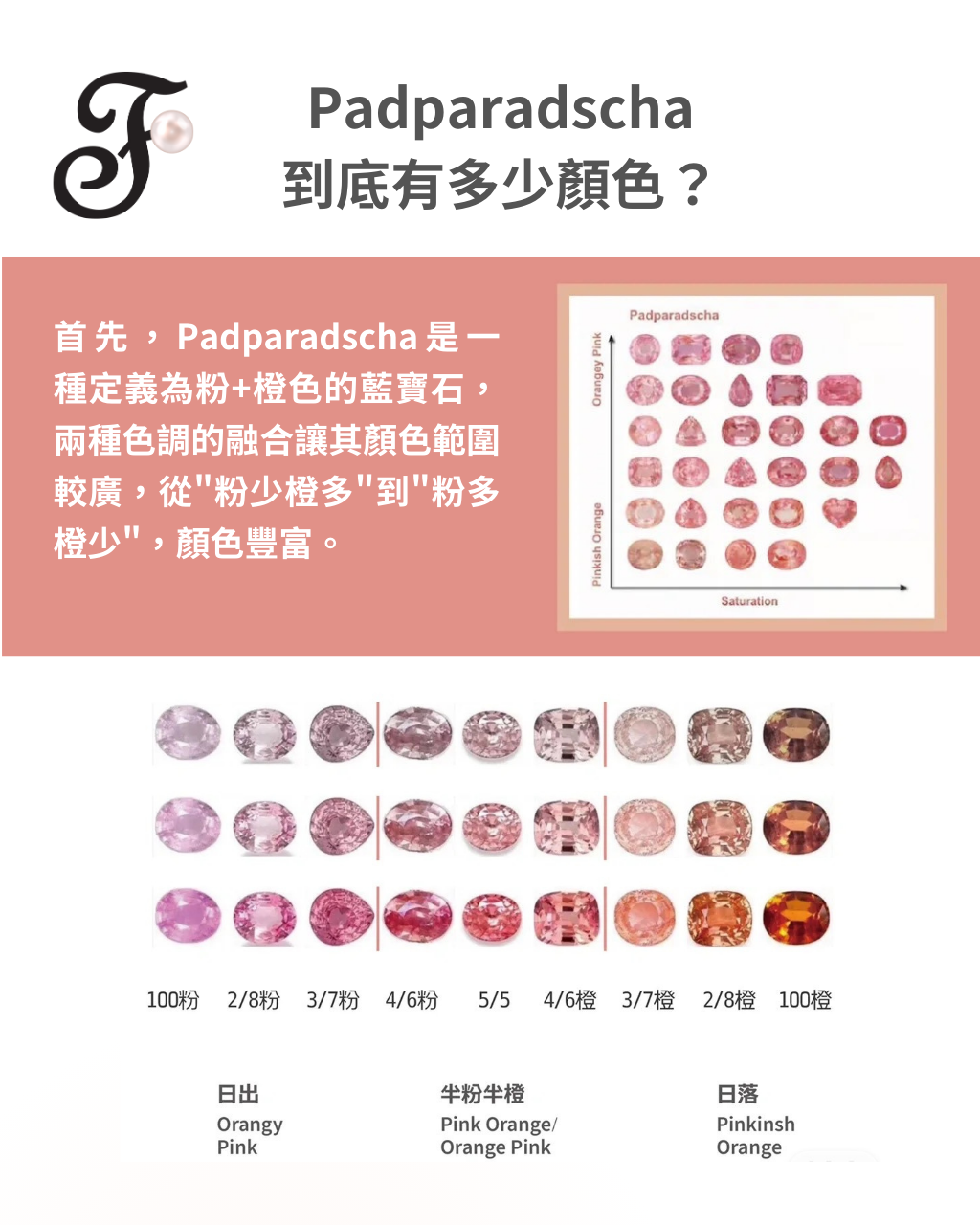
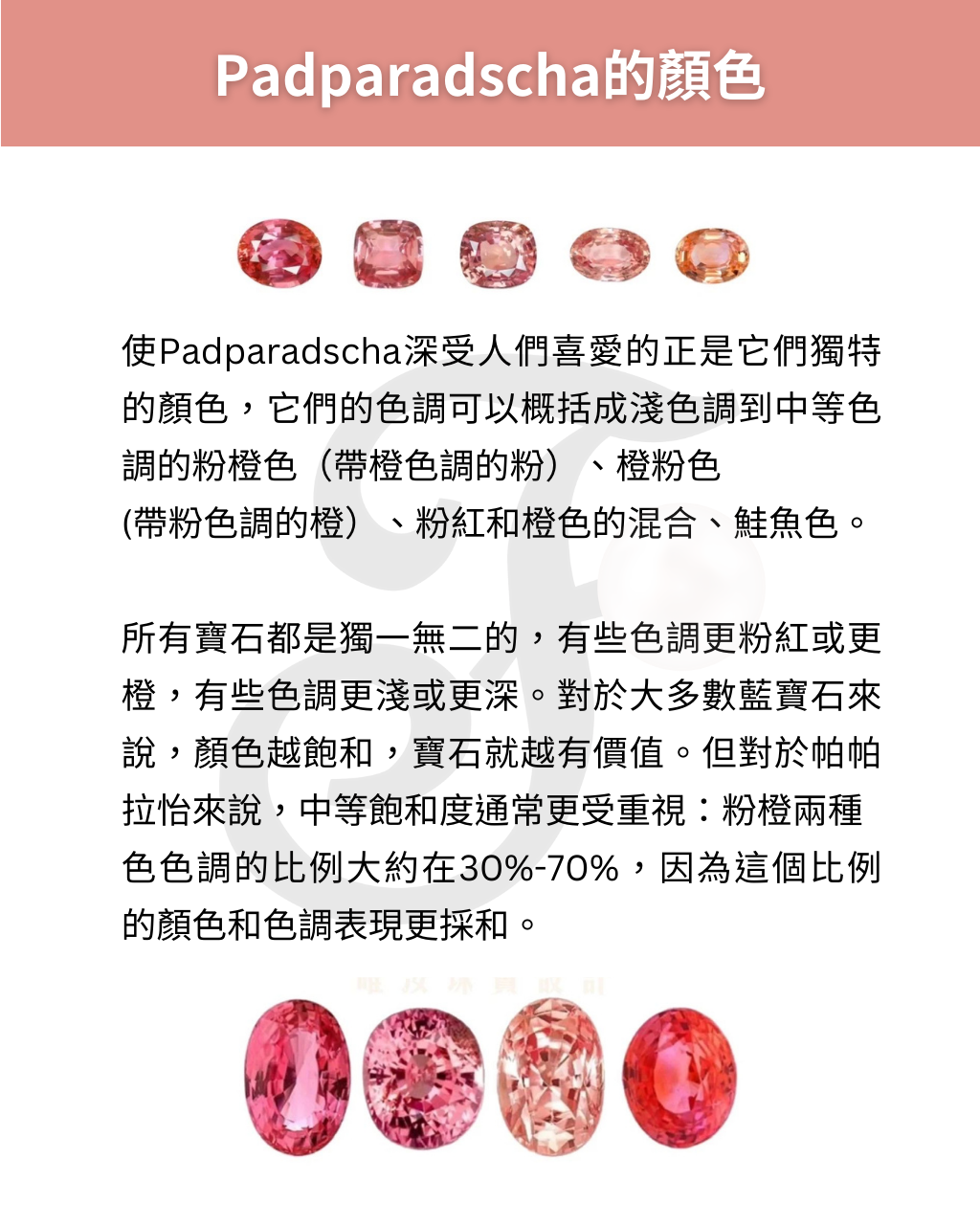
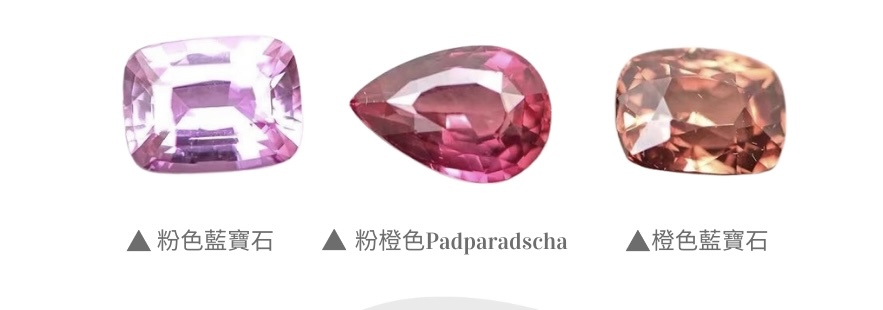
Padparadscha顏色比例非常嚴苛,粉橙兩種顏色比例嚴格控制在30%-70%,並且不能有任何其他雜色,對色彩穩定性、品質、亮度和飽和度等也有要求,滿足不了以上任一條件,都只能稱之為粉色藍寶石、橙色藍寶石,而不能算是真正的Padparadscha。
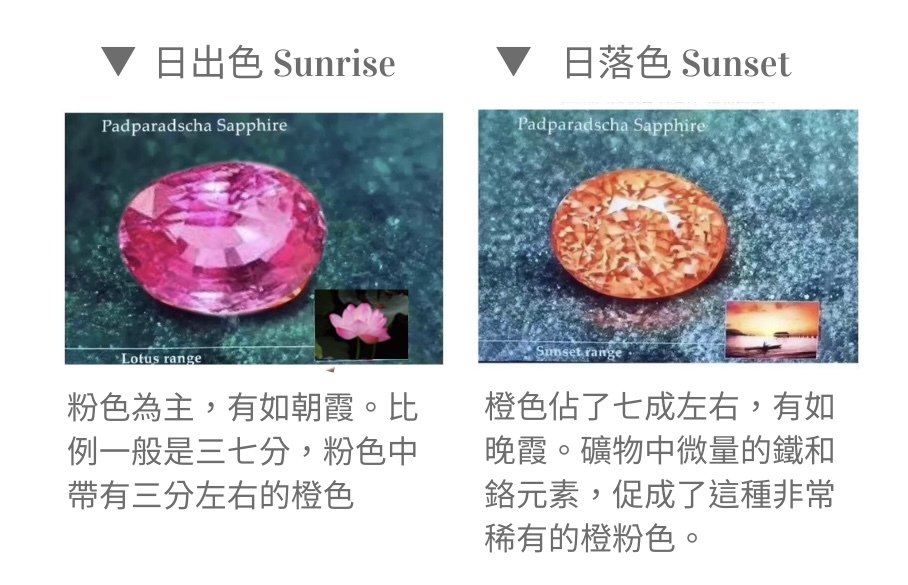
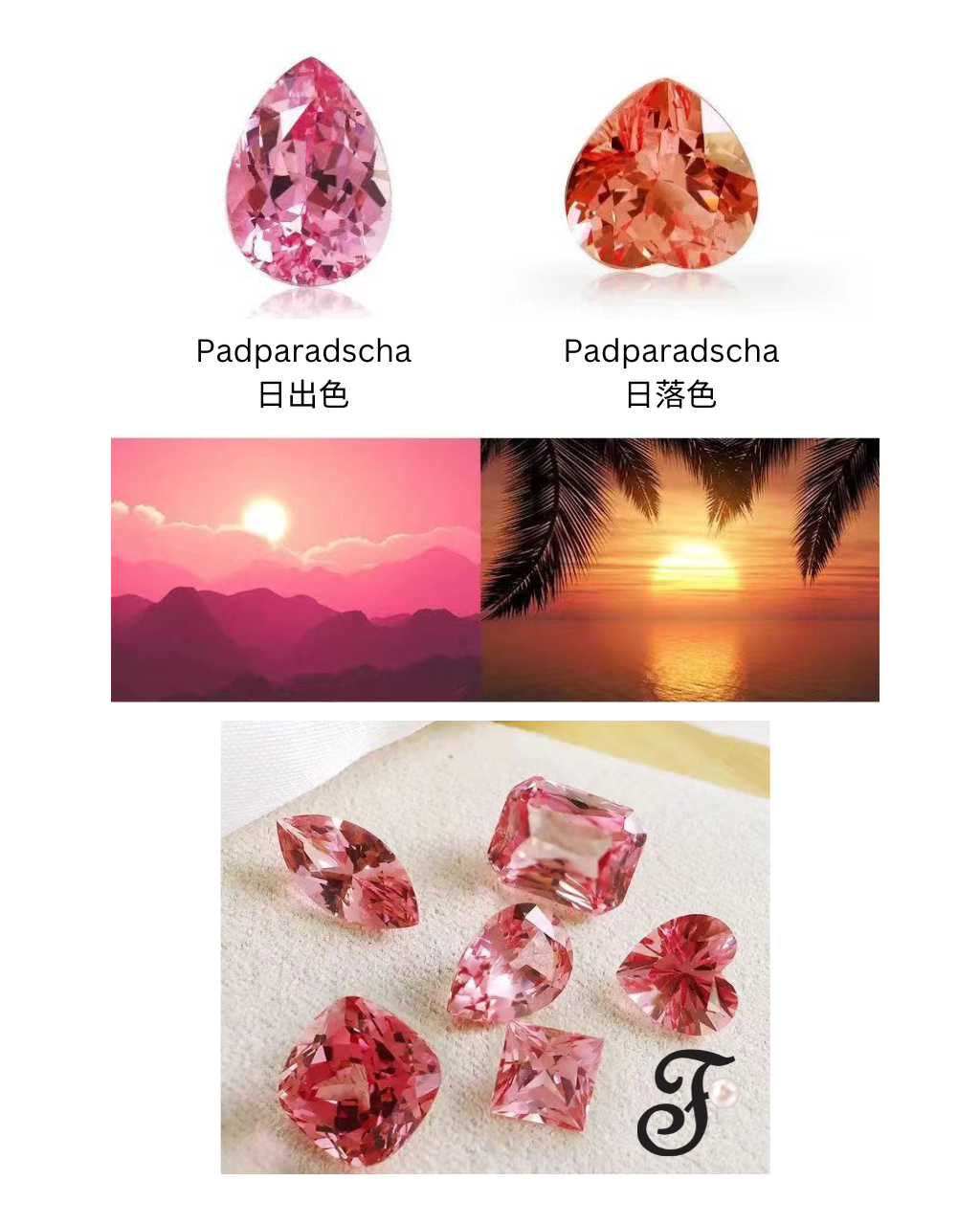
一般來說,Padparadscha可以分為「日出色-粉橙色」和「日落色-橙粉色」兩個色系,粉橙色如紅蓮如日出,純淨溫柔而又璀璨;橙粉如日落,明艷動人而仙氣十足。
哪一種顏色最具有價值?
大部分學者認為,最理想的顏色,應為50%的粉色加上50%的橙色。美國寶石鑒定所,在分析Padparadscha時,則認為最佳的比例是55%的粉色,加上45%的橙色。但能達到這個標準非常罕見。所以,目前最受認可的標準是,粉色和橙色在整粒寶石的顏色中佔到30%~70%,並且沒有其他雜色。
所有Padparadscha的的顏色都是獨一無二的,實際上,在選擇Padparadscha的的顏色時,自己喜歡才是最重要的。
什麼樣的藍寶石不能稱為Padparadscha?
首先要明確的是Padparadscha的靈魂來源於顏色,獨特的粉色與橙色的融合之美,是彩寶世界獨一份。
不是所有粉橙色和橙粉色的藍寶石,都可以被稱為Padparadscha,以下情況不會被稱為Padparadscha:
- 那些帶有深棕色的橙色,甚至是中等棕色調的橙色剛玉不是Padparadscha,同樣,深橙紅色剛玉也不不符合這個定義。
- 寶石除了粉色或橙色外還擁有其它色調。
- 顏色分布明顯不均勻。
- 大量黃色或者橙色的次生物質填充在裂隙中,明顯影響了寶石的整體顏色。
- 寶石表面有明顯塗層,有墊色的鑲嵌首飾。
- 其它影響顏色的因素,如經過鈹擴散處理的寶石。
- 顏色不穩定的沒有資格被稱為「Padparadscha」。(選購時確保有做過顏色穩定測試)
如何選購Padparadscha?
1) 是否經過處理?
為了以更低的成本模仿Padparadscha的獨特美麗,目前市場上已經開發了許多處理方法,以便其他較便宜的藍寶石中,創造出類似Padparadscha的粉橙色。由處理過產生的顏色不穩定,長時間暴露在陽光下會褪色。其他處理,例如上油,染色和表面擴散。因此,在選擇寶石時,請務必檢查其真偽。在發現的Padparadscha中,只有 0.5–1%未經處理,並且具有寶石品質。
2) 淨度是否影響到顏色?
淨度是選擇Padparadscha時的一個重要因素,因為它的淺色調很容易顯露出內含物,使漂亮的顏色變暗。
3) 顏色是否有經過穩定測試?
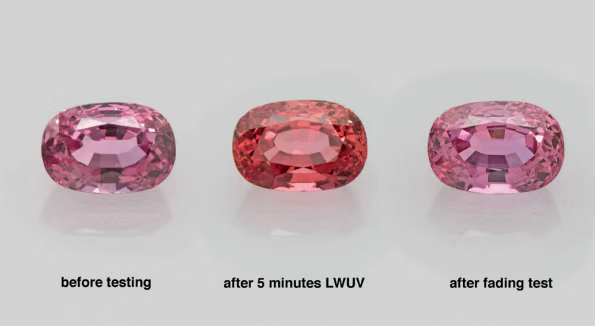
Padparadscha由粉色及橙色組成。Padparadscha的粉色調主要是由內部的Cr鉻元素形成,而橙色調主要是由Fe鐵導致或者色心致色。所以當你購買的Padparadscha的橙黃色調,是由於色心致色的,那就可能發生褪色現象。但是如果你購買的Padparadscha,它的橙黃色調是由鐵致色,則不會褪色變成粉色藍寶石。所以選購時務必確認證書是否有經過顏色穩定測試。
▲左為激活色心前的粉色藍寶石,中為激活黃色色心後的粉橙色藍寶石,右為激活後又褪色成粉色的藍寶石。
4) 是否有提供權威證書?
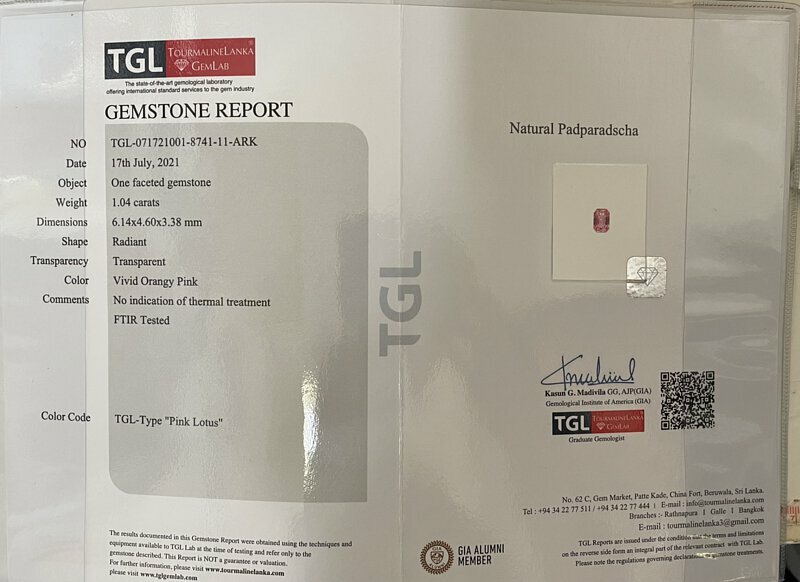
要確定一顆藍寶石是否稱得上Padparadscha,最簡單的方式就是看鑒定證書。所有機構都會注明寶石種類是否是天然的Padparadscha,以及備注是否經過處理。顏色評級是否達到Padparadscha。
選擇合適Padparadscha必須是一個詳細而細緻的過程,與其他彩色寶石有所不同,必須眼見為實,因此在購買前必須尋求專業、值得信賴的珠寶商,才能在選擇Padparadscha時,為您提供正確的指導。
如何避坑?
1) 冒充品
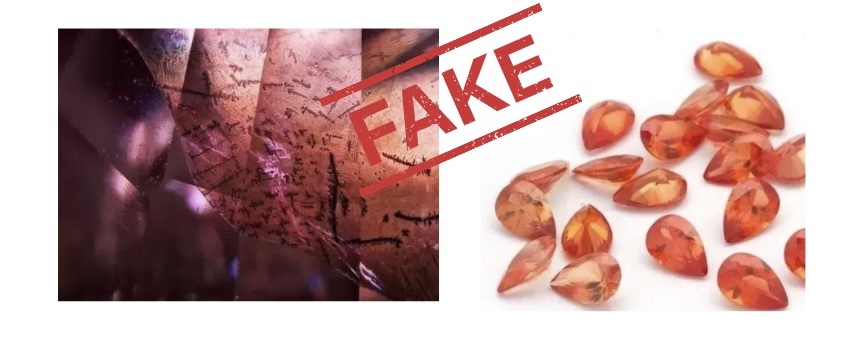
由於Padparadscha價值非常高,並且市場上資源少之又少,所以很多商家會用橙色藍寶石、粉色藍寶石來冒充Padparadscha。我們可以通過仔細觀察進行辨別,Padparadscha的的晶體顏色分布或有不均勻,所以可以通過這個簡單的方法來辨別。
2) 合成的Padparadscha
市場上目前合成的Padparadscha最常見的方法就是焰熔法合成,這種合成的帕帕拉恰的最簡單鑒別方法是觀察其顏色和晶體,合成的帕帕拉恰顏色會特別鮮艷,顏色很不自然,還可以利用顯微鏡進行觀察,在其內部會發現弧形紋路、氣泡或者有樹枝狀包裹體等。
3) 經過劣質優化的Padparadscha
注意不要買到劣質優化處理的Padparadscha,傳統熱處理已經是行內許可的優化方式了,由於Padparadscha獨一無二的顏色特殊性,熱處理的Padparadscha也比較多。 傳統加熱的Padparadscha可以買,但是加熱的技術好壞會大大影響後期寶石顏色的穩定性,一定要找可信的商家選購。
查看我們的Padparadscha系列👇🏻👇🏻
https://www.fairytale-hk.com/categories/padparadscha
Padparadscha is also known as "lotus sapphire" or "lotus corundum" and belongs to the corundum family. Gemologists classify red chromium-containing corundum as ruby, and the rest as sapphire. Therefore, Padparadscha is also a member of the sapphire family. Its pink-orange lotus color is called "a one-in-fifty-thousand miracle," which is why it has earned the reputation of being an imperial sapphire. Lotus corundum is very rare and expensive, and many connoisseurs consider it the most beautiful of all gemstones.
To be called Padparadscha, regardless of origin, it must first satisfy the condition of possessing both pink and orange, with the two tones cleverly blended together. When observed under standard daylight, the color ranges from an obviously light to medium-toned slight pink-orange, and even orange to pink or orange-red.
Moreover, only orange-pink sapphires with stable color will be given the title of Padparadscha. If the color fades, it can only be called a pink-orange sapphire. This ultra-rare mixed color of pink and orange is the rarest color among sapphires, making Padparadscha the king of all sapphires and one of the most expensive gemstones.
Why is Padparadscha so precious?
Padparadscha's hardness is second only to diamond, and its origins are limited to only four places, with an extremely scarce output. According to research, Padparadscha's mineral reserves are only 1% of ruby's, and the scarcity of its sources is comparable to the world's rarest pigeon's blood red! Therefore, its collectible value is quite high.
Origins
Padparadscha was first discovered in Sri Lanka, so its most famous origin is Sri Lanka. Later, sapphires of this color were also produced in Madagascar and Tanzania in Africa, and Vietnam in South Asia, but the origins are still very scarce.
Among the origins, Sri Lanka is the most orthodox. What is now generally recognized internationally as Padparadscha refers broadly to corundum that, under standard daylight, has a bright tone, light to medium saturation, and "possesses both pink and orange tones."
Color
Padparadscha's color ratio is extremely strict. The proportion of the two colors, pink and orange, must be strictly controlled between 30% and 70%, and it cannot have any other miscellaneous colors. There are also requirements for color stability, quality, brightness, and saturation. If any of the above conditions cannot be met, it can only be called a pink sapphire or orange sapphire, and cannot be considered a true Padparadscha.
Generally speaking, Padparadscha can be divided into two color series: "sunrise color—pink-orange" and "sunset color—orange-pink." Pink-orange is like a red lotus or sunrise, pure, gentle, and brilliant; orange-pink is like sunset, bright and moving, full of ethereal beauty.
Which color is the most valuable?
Most scholars believe that the most ideal color should be 50% pink plus 50% orange. When analyzing Padparadscha, the Gemological Institute of America considers the best ratio to be 55% pink plus 45% orange. But reaching this standard is very rare. Therefore, the currently most recognized standard is that pink and orange account for 30% to 70% of the overall color of the gemstone, with no other miscellaneous colors.
Every Padparadscha's color is unique. In fact, when choosing the color of a Padparadscha, what you personally like is the most important thing.
What kind of sapphire cannot be called Padparadscha?
First of all, it must be made clear that Padparadscha's soul comes from color. The unique beauty of the fusion of pink and orange is unmatched in the world of colored gemstones. Not all pink-orange and orange-pink sapphires can be called Padparadscha. The following situations will not be called Padparadscha:
- Orange corundum with dark brown orange, or even medium brown-toned orange, is not Padparadscha. Similarly, dark orange-red corundum also does not meet this definition.
- The gemstone has other tones besides pink or orange.
- The color distribution is obviously uneven.
- A large amount of yellow or orange secondary material fills the fractures, obviously affecting the overall color of the gemstone.
- The gemstone surface has an obvious coating, or the jewelry setting has color backing.
- Factors affecting color, such as gemstones that have undergone beryllium diffusion treatment.
- Those with unstable color are not qualified to be called "Padparadscha." (When purchasing, make sure a color stability test has been done.)
How to choose a Padparadscha?
- Has it been treated?
In order to imitate Padparadscha's unique beauty at a lower cost, many treatment methods have now been developed on the market to create a Padparadscha-like pink-orange color in other cheaper sapphires. Colors produced by treatment are unstable and will fade after long exposure to sunlight. Other treatments include oiling, dyeing, and surface diffusion. Therefore, when choosing a gemstone, be sure to check its authenticity. Among the Padparadscha discovered, only 0.5–1% are untreated and of gem quality. - Does clarity affect the color?
Clarity is an important factor when choosing Padparadscha, because its light tone easily reveals inclusions, making the beautiful color darker. - Has the color undergone a stability test?
Padparadscha is composed of pink and orange. Padparadscha's pink tone is mainly formed by the internal element Cr (chromium), while the orange tone is mainly caused by Fe (iron) or color centers. So if the orange-yellow tone of the Padparadscha you buy is caused by color centers, fading may occur. But if the orange-yellow tone of the Padparadscha you buy is caused by iron, it will not fade into a pink sapphire. Therefore, when purchasing, be sure to confirm whether the certificate has a color stability test. - Is an authoritative certificate provided? The simplest way to determine whether a sapphire deserves to be called Padparadscha is to look at the appraisal certificate. All institutions will note whether the gemstone type is natural Padparadscha, as well as whether it has been treated. Whether the color grading reaches Padparadscha. Choosing a suitable Padparadscha must be a detailed and meticulous process. Unlike other colored gemstones, it must be seen to be believed. Therefore, before purchasing, you must seek a professional and trustworthy jeweler who can provide you with correct guidance when choosing a Padparadscha.
How to avoid pitfalls?
- Imitations
Because Padparadscha is extremely valuable and there are very few resources on the market, many merchants use orange sapphires or pink sapphires to pass off as Padparadscha. We can distinguish them by careful observation. Padparadscha's crystal color distribution may be uneven, so this simple method can be used to identify it. - Synthetic Padparadscha
At present, the most common method of synthesizing Padparadscha on the market is flame fusion synthesis. The simplest way to identify this synthetic Padparadscha is to observe its color and crystal. Synthetic Padparadscha's color will be especially vivid and very unnatural. You can also use a microscope to observe it, and you will find curved striae, bubbles, or dendritic inclusions inside. - Padparadscha that has undergone poor-quality optimization
Be careful not to buy Padparadscha that has undergone poor-quality optimization treatment. Traditional heat treatment is already an industry-approved optimization method. Due to Padparadscha's unique color characteristics, there are also relatively many heat-treated Padparadscha. Traditionally heated Padparadscha can be bought, but the quality of the heating technology will greatly affect the stability of the gemstone's color later on. Be sure to choose a trustworthy merchant when purchasing.
Our Padparadscha Collection
https://www.fairytale-hk.com/categories/padparadscha